
How to Train Your Dog to Stand and Stay
Training your dog to "stand" on command is very useful. This basic command is used to tell your dog to stand up on all four paws without moving. Learn
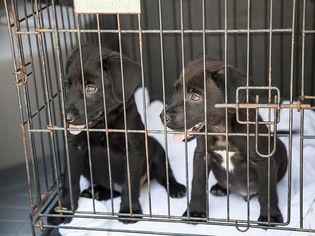
Crate training is a great tool for housebreaking a puppy. A dog crate can also provide a safe haven for your puppy long after it becomes an adult. If you plan on using a crate to train a puppy, it's vital that you take the time to properly introduce the pup to the crate.
Ensuring that your puppy easily gets used to its crate starts with choosing a crate that's the right size. No matter which type of dog crate you choose, it's important that you pay close attention to the dimensions.
Crates should be large enough for a puppy to lie down and turn around in comfortably. A crate that is too small will leave your puppy cramped and uncomfortable. A crate that is too large may leave enough space for your puppy to sleep and have a separate spot to use as a potty area.
Before you introduce your puppy to the crate, try to make it as comfortable as possible. Most puppies aren't going to want to spend time lying on the cold, hard crate floor for very long.
Start by adding something soft, warm, and preferably washable in the bottom of the crate. Small throw blankets, towels, and crate pads all work well. Keep in mind that crate pads can be harder to clean. You might want to wait to get a pad until you have some housebreaking success.
There are also several products on the market designed to make a puppy's first days and nights in its new home easier. These are usually plush toys which allow you to tuck a hot water bottle inside or have devices that mimic the mother's heartbeat. Some puppy owners report having good luck using these types of products, so you may want to consider one to make the puppy's crate more comfortable.
It's also important to think about how to keep your puppy from getting bored in the crate. You may want to put some chew toys, stuffed animals, squeaky toys, or food dispensing toys in the crate.
For the best results, try putting two or three toys in at a time, and rotate the toys every few days or so. This way, your puppy finds something new and interesting every time it enters the crate.
With the crate prepared, it's time to bring the puppy in. The first time your pup sees the crate, don't push it in and close the door. Instead, allow the puppy time to explore the crate on its own. Let it walk in and out of the crate at will. If the puppy seems hesitant to step into the crate, try throwing a few treats inside.
Once the puppy has gotten comfortable walking in and out of the crate, you can begin closing the door behind it. Start off with short periods—no more than a few minutes each time—and work up to longer periods.
When you first close the crate door, stay in the room. After the puppy has been able to stay calm with the door closed a few times, start stepping outside of the room. The first time, simply step out for a few seconds and then come back into the room. Don't make a big deal, and don't immediately open the crate door. Slowly work your way up to leaving your puppy in the closed crate for longer periods.
While a dog crate is a great tool for managing your puppy's behavior when you are unable to supervise, it's not meant to be the place the puppy spends all its time. Puppies need time to run around, play and socialize with their new family as well.
Since your puppy will be uncomfortable if it eliminates in the crate, it's important that you don't leave it in there longer than it can hold its bladder or bowels. Puppies under 6 months of age should not be left in a crate for more than three or four hours at a time. Young puppies may need even shorter periods in the crate to prevent having accidents in there.
A common mistake dog owners make is using the crate as a form of punishment. The goal of crate training is to create a happy environment where your puppy likes to spend time. Yelling at a dog and pushing it into the crate can lead to fear and anxiety whenever they go near it.
Additionally, in order for crate training to work, don't let your puppy out if it's whining or barking. That will only teach it that it gets what it wants by making a lot of noise. The puppy should be calm whenever you open the door.
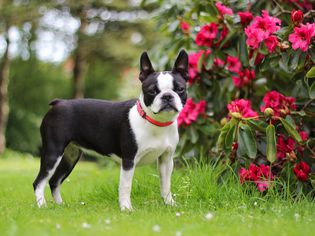
Training your dog to "stand" on command is very useful. This basic command is used to tell your dog to stand up on all four paws without moving. Learn

Tea tree oil for fleas is one of many natural remedies often posed as alternatives to traditional medications, but it's not necessarily safe and effec
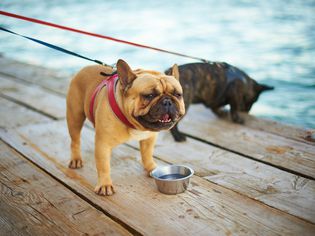
Dehydration is a water deficiency in the body. Your puppy loses water every day during elimination, the exhalation of each breath, and through the eva
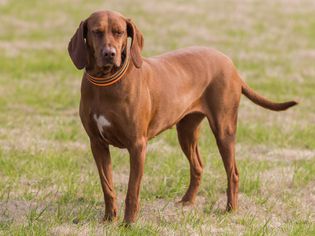
The Redbone coonhound is a medium to large American hound dog with a short, sleek, brilliant red coat and a muscular body. Mild-mannered yet energetic

The Aussiedoodle is a cross between an Australian shepherd and a standard poodle. Aussiedoodles are energetic, medium-to-large dogs that may not bothe
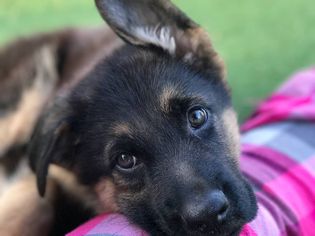
These intelligent canines are known for their jobs as police assistants, search and rescue pups, contraband sniffers, service dogs and more.
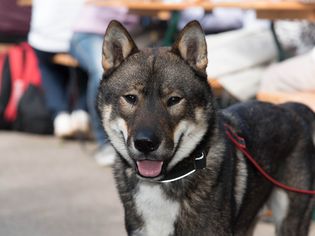
Shikoku (sometimes called Kochi-Ken) are medium-sized spitz dogs from Japan with thick fur, pointed ears, and short, upward-curling tails. These dogs
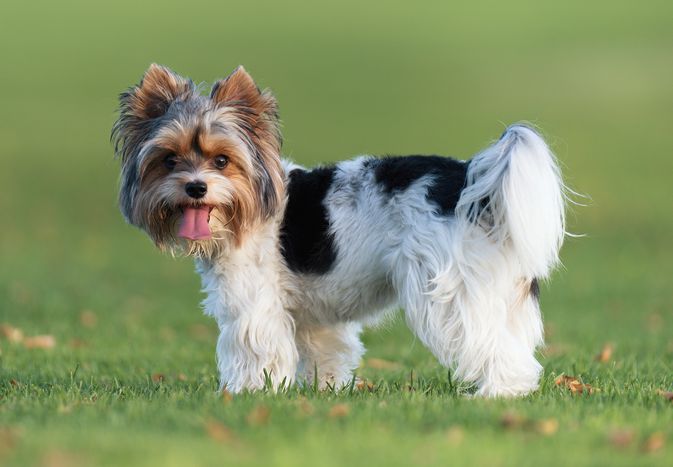
The Biewer terrier is a toy German dog with a tri-colored, long, silky coat and plume-like tail. A relatively new breed, the Biewer terrier is a desce
We are a comprehensive and trusted information platform dedicated to delivering high-quality content across a wide range of topics, including society, technology, business, health, culture, and entertainment.
From breaking news to in-depth reports, we adhere to the principles of accuracy and diverse perspectives, helping readers find clarity and reliability in today’s fast-paced information landscape.
Our goal is to be a dependable source of knowledge for every reader—making information not only accessible but truly trustworthy. Looking ahead, we will continue to enhance our content and services, connecting the world and delivering value.