
Top Ten Essential Dog Training Supplies
You don't need that many supplies to start training a dog. However, there are some tools that can make your job much easier. Certain dog training tool
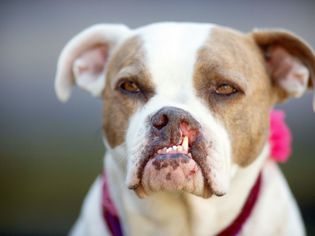
A cleft palate may not be immediately noticeable in a puppy, but it's a serious birth defect that needs special attention. This physical deformity can leave an opening from the mouth to the nose, which can allow food and liquids to get into the airway. It helps to know what is involved in treating and caring for a dog with a cleft palate.
A cleft palate is a birth defect that occurs when the tissues of a dog's mouth and/or lip do not grow completely together. The condition is known by several names in dogs. Orofacial clefts, congenital oronasal fistula, primary cleft, harelip, cleft lip, and secondary cleft all refer to this birth defect of a dog. There are different types of cleft palates and some affect the hard, soft, or both palates inside the mouth while others affect the nostrils and lips. Some forms of a cleft palate are more obvious than others, especially if the nose and mouth are externally deformed.
There are several signs that a puppy has a cleft palate, even if they aren't obvious. Here are the symptoms that accompany cleft palates in dogs.
Two main physical signs of a cleft palate or cleft lip include a deformed lip or a nostril. A dog may only have one deformed nostril depending on the shape and position of the cleft. You can't immediately see the opening extending inside the mouth along the hard or soft palates that accompany a lip or nostril deformity.
Depending on the shape and position of the defect, the dog's upper or bottom teeth and gums may awkwardly stick out of the mouth.
Since a cleft palate allows food, water, and saliva to enter the respiratory tract, a dog with this abnormality will often sneeze or have a runny nose. This is due to the excess fluid entering the nasal passages.
Coughing or gagging when attempting to drink water will also occur since some of this water is going down the trachea instead of the esophagus. A dog breeder may recognize a problem if a newborn puppy is having trouble nursing because it can't latch on to its mother or a bottle. Milk may be coming out of its nose or it may cough and gag when attempting to nurse.
These deformities and the fact that food and water can go down the airway make eating difficult so a dog may be malnourished if it isn't eating enough.
Difficulty breathing may occur if too much fluid goes down the airway as well. A dog with a cleft palate may develop aspiration pneumonia due to difficulty in breathing and since it is inhaling into the lungs substances and/or food it should be swallowing instead.
A cleft palate is a congenital problem. This means that a dog is born with this problem making it a genetic condition. However, the puppy's mother may have encountered nutritional deficiencies, viruses, and poisons during pregnancy that resulted in the birth defect, as well. Purebred dogs are more likely to have the condition than mixed breeds. Breeds with brachycephalic syndrome appear to be especially at risk.
A cleft palate is often noticed when a newborn puppy is not gaining weight and eating well. This exam finding is a key indicator that there may be a cleft palate inside the puppy's mouth if it's not already visible.
Since there are a few different kinds of cleft palates, it may not be externally visible and the inside of the mouth will need to be examined. The roof or back of the mouth will have an opening in it if the dog has a cleft palate. A small light or special oral examination tool called a laryngoscope may be needed to see the opening, especially in a small puppy. Occasionally sedation is needed to examine this abnormality.
Depending on the type of cleft palate, corrective surgery may be necessary to try and fix the deformity. Depending on the severity, sometimes supportive care including tube feeding and starting the puppy on solid foods as soon as possible can be pursued until able to surgery can be performed. A temporary prosthesis or a mouth appliance is another possibility to successfully feed a puppy until it is old enough for surgery at about three or four months of age.
Many puppies that have cleft palates are often euthanized shortly after birth due to the difficulty in feeding. Though surgery may be an option, it is risky when done on young dogs that are possibly malnourished and may have other complications like aspiration pneumonia. It also is usually a costly procedure with a low success rate and major post-surgical care. However, if the cleft is small and surgery is elected, the post-surgical prognosis is very good.
Since cleft palates are a birth defect, selective breeding may be the only way to try and prevent a cleft palate in a dog. A dog born with a cleft palate should not be used for breeding. Cleft paletes tend to occur more in breeds with certain skull types, especially brachycephalic breeds.

You don't need that many supplies to start training a dog. However, there are some tools that can make your job much easier. Certain dog training tool
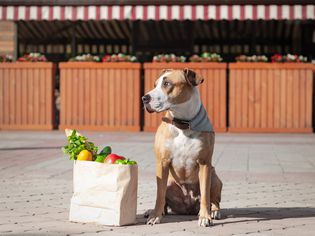
Bell peppers, sometimes called sweet peppers or capsicums, have long been known as a healthy, nutritious food for people. They are low-calorie and pac

It’s all-too-tempting to recreate that Lady and the Tramp scene with your pup, sharing a plate of pasta and almost smooching their adorable nose. It u

Cauliflower is a cruciferous veggie full of fiber that is safe for dogs to eat in moderation. Adding veggies to your dog’s routine can be a great way
Neuter is the term used to describe the surgical removal of a dog's reproductive organs, and castration is the term used for the removal of testic
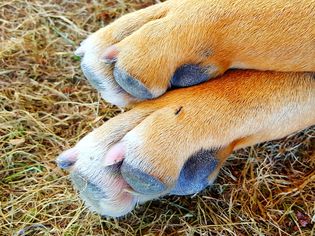
Ant bites on dogs may be considered a minor nuisance, but when dogs stick their curious noses into certain ants' business, it can result in extrem
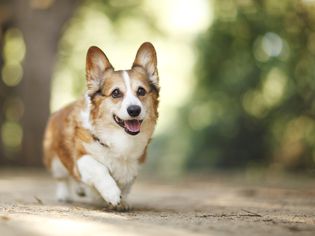
Degenerative myelopathy affects dogs in a major way, but initially it may be confused with other conditions or disease processes. By understanding mor
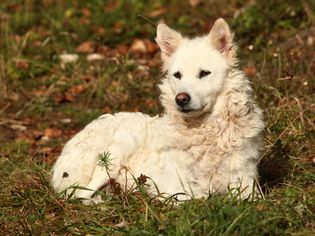
The Mudi is a medium-sized herding breed from Hungary with a wavy coat, pointed ears, and coat colors that can include a unique merle pattern. As a wo
We are a comprehensive and trusted information platform dedicated to delivering high-quality content across a wide range of topics, including society, technology, business, health, culture, and entertainment.
From breaking news to in-depth reports, we adhere to the principles of accuracy and diverse perspectives, helping readers find clarity and reliability in today’s fast-paced information landscape.
Our goal is to be a dependable source of knowledge for every reader—making information not only accessible but truly trustworthy. Looking ahead, we will continue to enhance our content and services, connecting the world and delivering value.