
Reasons Why Your Dog Follows You Everywhere
Whether you named your dog Shadow or not, there’s a good chance that your canine companion follows you around the house. Many dogs seem to love (or ev
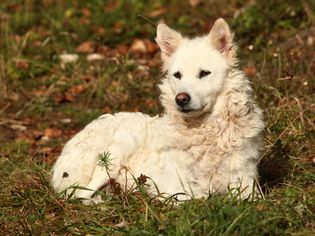
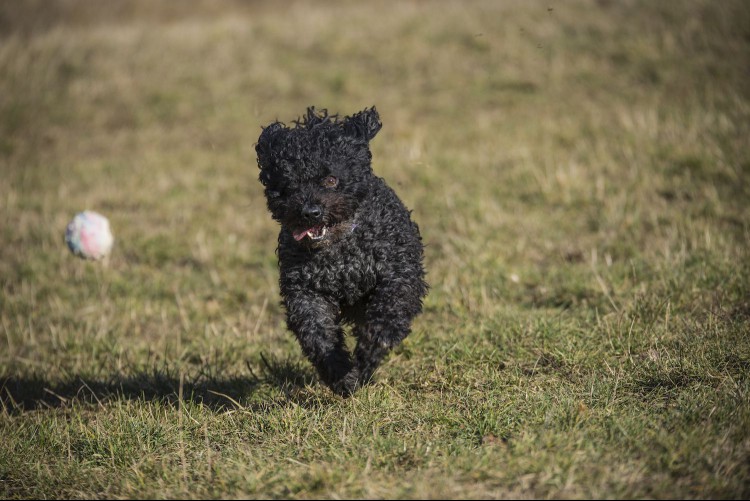
The Mudi is a medium-sized herding breed from Hungary with a wavy coat, pointed ears, and coat colors that can include a unique merle pattern. As a working breed, Mudis are agile and intelligent dogs that can serve as versatile farm dogs and loyal protectors of their families. These alert, powerful canines are courageous enough to herd the most stubborn livestock while standing guard over their homes without an overly aggressive nature. The multi-talented Mudi is a hard worker that still makes a gentle, loyal family companion.
Group: Herding
Weight: 18 to 29 pounds
Height: 15 to 18.5 inches
Coat: Short and straight on the face and the front of legs, wavy to curly throughout the body
Coat Color: Black, brown, gray, gray-brown, white, yellow, or merle
Life Span: 12 to 14 years
Temperament: Friendly, courageous, intelligent, active, bright
Hypoallergenic: No
Origin: Hungary
The Mudi is an energetic dog that does best with active families or homes that can provide a job for it to do. Whether you're working a farm or practicing agility training in the backyard, this dog is always up for new activities. Thanks to its intelligent personality and eagerness to please its owners, the Mudi is easily trainable and picks up on obedience lessons quickly. These dogs are also very affectionate with both adults and children, and they have a friendly temperament with other animals when raised together.
| Affection Level | High |
| Friendliness | Medium |
| Kid-Friendly | High |
| Pet-Friendly | Medium |
| Exercise Needs | High |
| Playfulness | High |
| Energy Level | High |
| Trainability | High |
| Intelligence | High |
| Tendency to Bark | High |
| Amount of Shedding | Medium |
The Mudi dog has been around since the 19th century. The original name for Hungarians, the Magyars, began keeping sheepdogs around the end of the 9th century. At that time, the breed was only grouped into two categories—large or small—as pedigree breeding and the classification of dogs didn’t start until the second half of the 19th century.
It’s believed that the breed evolved from crosses of the Puli, Pumi, and German Spitz breeds. When breeding, the small dogs were typically divided from the larger ones and interbred. The Mudi shares its early history with both the Pumi and the Puli.
Sometime around 1930, Dr. Deszö Fényesi, a director of the museum in Balassagyarmat, was one of the first to breed the small Mudi sheepdog separately. He is credited for naming the breed, which was officially recognized in 1936.
World War II severely impacted several Hungarian breeds. Some almost disappeared, and the Mudi was already rare. In the 1960s, its population was rehabilitated, and a few years later a new breed standard was written by Dr. Zoltan Balassy when applying for FCI recognition. This accepted different sizes and colors. The new standard was approved in 1966, but few remained interested in breeding Mudi dogs.
The restoration of the breed continued over the next few decades, and another new standard was written in 2000 to include some of the original colors. In 2004, the Mudi appeared on a Hungarian postage stamp to honor the dogs, which are considered national treasures, and they were added to the Foundation Stock Service the same year. The Mudi is currently the only herding breed that includes the merle color and solid white coats.
Today, the breed remains very rare. There are only a few thousand Mudis worldwide, with the greatest numbers being in Hungary, followed by Finland. While it's difficult to find elsewhere, these dogs are still a sought-after working breed. They still actively herd with Hungarian shepherds and their flocks containing as many as 500 sheep.
Mudis have also been used as search and rescue dogs in Finland and the United States. The breed excels at agility, obedience, and flyball among other dog sports. They’ve been eligible to compete in companion events since 2008, and more recently, they were approved to compete in the Miscellaneous Class on June 27, 2018, represented by the Mudi Club of America.
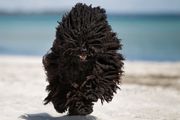
The Mudi is typically easy to care for when it's raised in active homes with dog training experience, but new dog owners should use caution, as this breed requires plenty of exercise to be a well-mannered pet. In the grooming department, Mudis are low-maintenance and need little more than basic care.
The Mudi is a very energetic, playful dog that requires at least an hour per day of exercise. This breed does best with a large yard to run around in, but owners should also plan for leashed walks and mental exercises like fetch or nose work to keep their dog entertained. They love to run, and they also excel at games like flyball, Frisbee, and agility sports.
Mudis can be relaxed, affectionate family companions indoors as long as they've received sufficient exercise throughout the day. Without enough activity, your Mudi may become mischievous and begin digging, jumping, or chewing inside.
The Mudi is considered a low-maintenance breed that's easy to care for when it comes to grooming. They only require occasional baths, combing, or brushing to remove excess fur from their coats, though they aren't a high-shedding breed. Owners should also brush their dog's teeth, trim their nails, and check their ears for dirt and debris. Use a cleaner formulated for the ears with a cotton ball to gently clean your dog's ears as needed.
The Mudi is a vocal and alert dog that’s adaptable and eager to please, so they are very trainable. Basic obedience lessons can begin as early as seven weeks of age. These dogs are also wary of strangers and make excellent watchdogs, especially because they're enthusiastic about having a job to do. This also means that owners will need to train the Mudi against excessive barking if it becomes too much. They are generally friendly with other household pets when raised together, but care should be taken to introduce your Mudi to plenty of new animals as a puppy to encourage a social temperament. These dogs make gentle, affectionate companions for children and families as long as they have been trained and socialized properly.
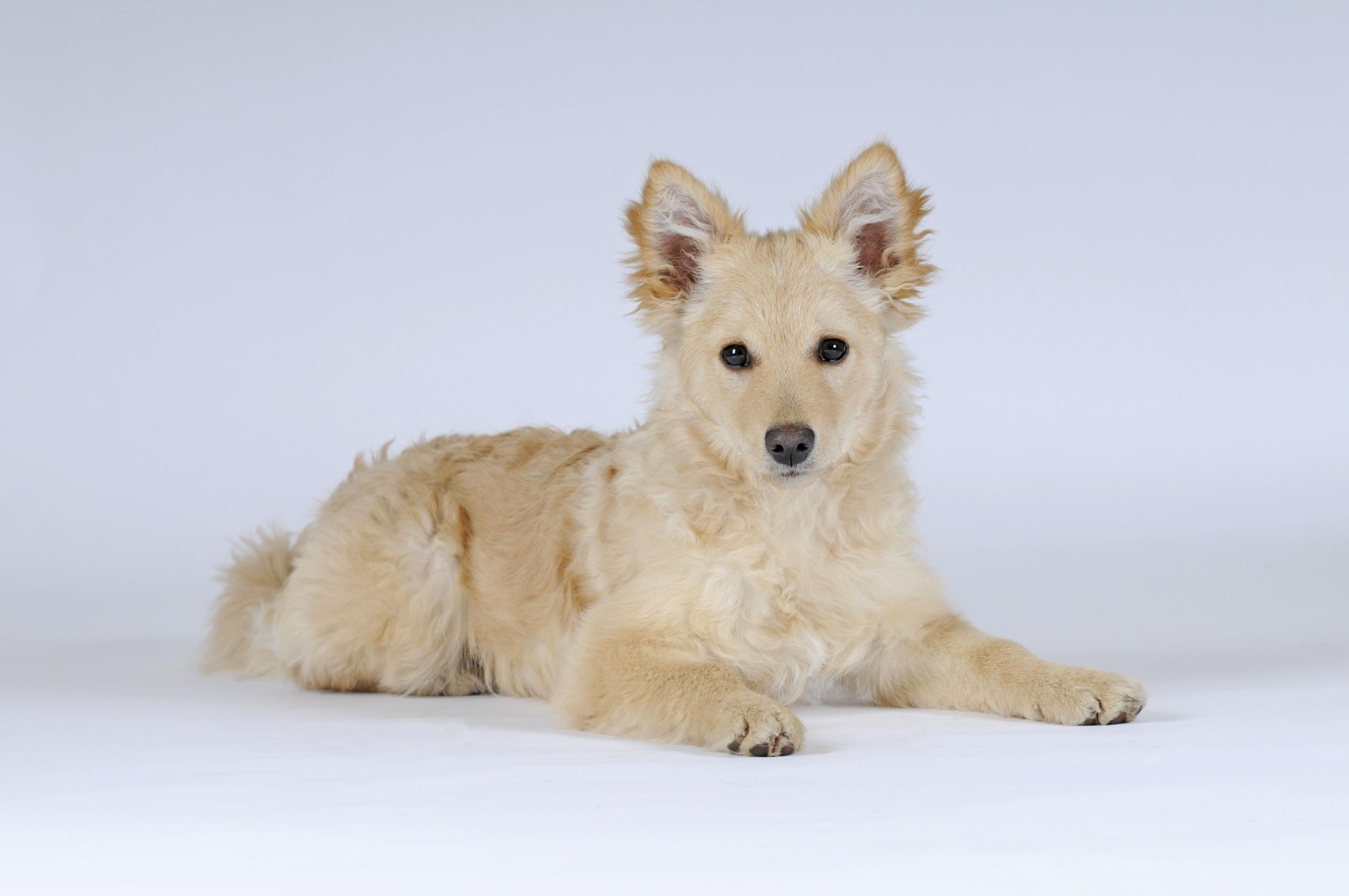
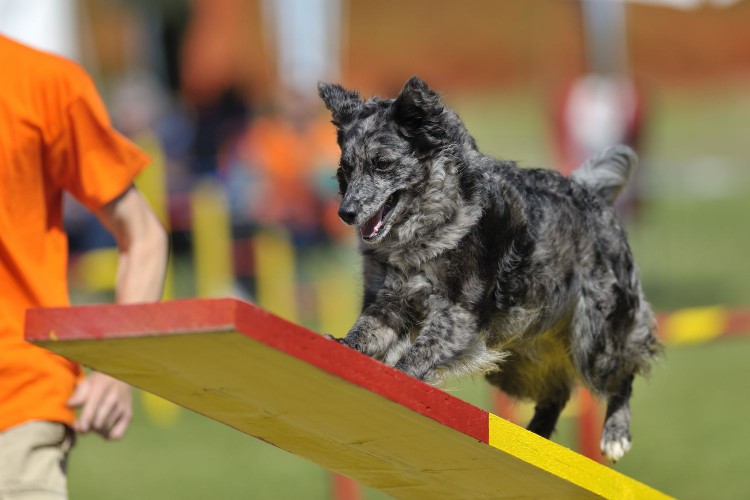
The Mudi is an overall healthy breed, but like most purebreds, it can be susceptible to inherited health problems. Responsible breeders strive to keep their genetic lines as healthy as possible. When adopting a puppy from a breeder, always ensure that you're provided with their family's medical history.
The following are common conditions associated with the breed:
The Mudi should perform well with high-quality commercial or home-prepared (under veterinary supervision) dog food. Fresh, clean water should be available at all times. As with all breeds, treats should be given in moderation and their diet should be controlled in order to avoid weight gain or obesity-related issues. Consult your veterinarian to determine the best portions and nutrients for your specific dog based on their age, weight, and activity level.
Since the Mudi is a very rare breed in the United States, prospective adopters may not have much luck finding these dogs in many shelters. However, breed-specific rescues can help you connect with a Mudi to join your family. Your local animal shelter may also have similar herding dog breeds in need of forever homes that might just become your next best friend.
If you're planning to adopt a Mudi as a puppy, be sure to research responsible breeders and work with one that readily provides the litter's medical history. You should also be allowed to meet your puppy's parents and see that the dogs are kept in a safe, comfortable location indoors. Puppies typically cost between $1,500 and $2,500, but prices may vary to $3,000 or higher depending on pedigree and availability.
To start your search, check out these resources for the national breed club, breed-specific rescues, and the AKC:
Protective of their inner circle
Affectionate and family-friendly
Easily trainable, eager to please
Tendency to bark
Can be aggressive toward other pets if not socialized
Needs considerable daily exercise
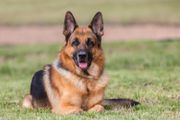
If you’re interested in learning more about similar dogs, consider these other breeds:
There are plenty of different dog breeds out there that can join your family. With a little research, you can find your next best friend!
The Mudi is still considered a very rare dog breed in most of the world, with most of its population living in Hungary and Finland. According to the AKC, there are less than 500 Mudis in the United States and only 3,000 to 4,000 around the globe.
With their friendly personalities, eagerness to please, and protective but non-aggressive nature, Mudis make excellent family dogs for most homes. They do best in active families, and prospective owners should prepare for this herding breed's exercise needs.
The Mudi breed's origins began with dogs of two sizes (large and small), but the modern breed is a small to medium-sized dog that typically never grows larger than 18.5 inches tall and 29 pounds.
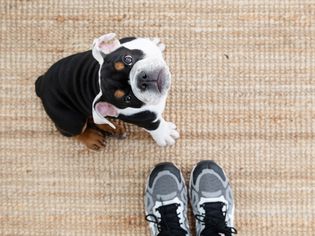
Whether you named your dog Shadow or not, there’s a good chance that your canine companion follows you around the house. Many dogs seem to love (or ev
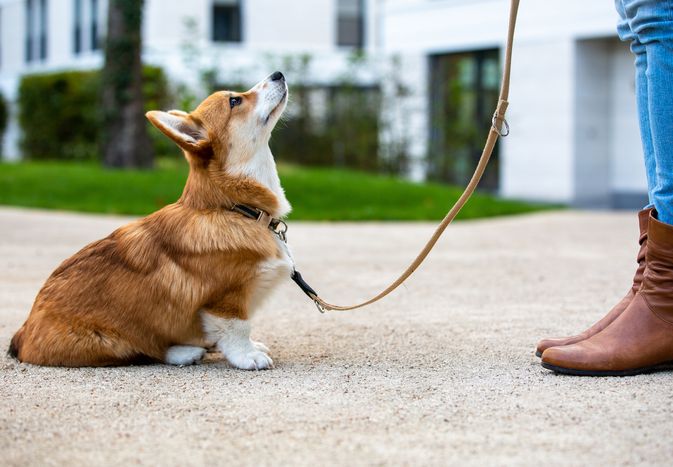
Desensitization and counterconditioning are two training methods that may help your dog overcome reactivity and negative feelings toward certain peopl
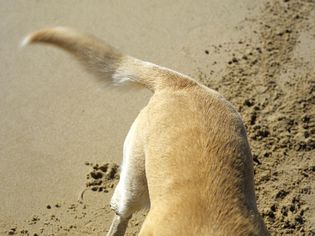
A wagging tail is a form of dog communication. Dogs wag their tails to tell us something about how they're feeling, just as they do with other forms o

Food allergies in dogs are uncommon and may cause problems with the skin, ears, or gastrointestinal tract. Usually, a dog food allergy will appear sud
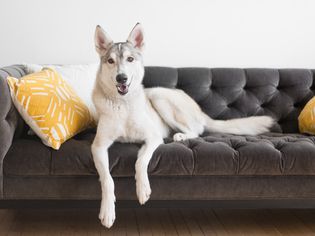
If you notice your young dog is limping on a front leg, it could be due to a condition called elbow dysplasia. Elbow dysplasia is an inherited conditi
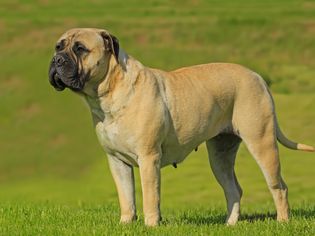
The Bullmastiff is a large-boned and muscular working dog from England with a short coat. Its origins as a cross between the Mastiff and the bulldog a
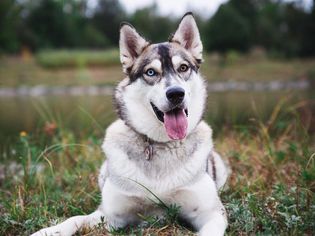
Siberian huskies are probably best-known for their incredible sled-pulling skills, but these doggies aren't all business! Indeed, they make excell
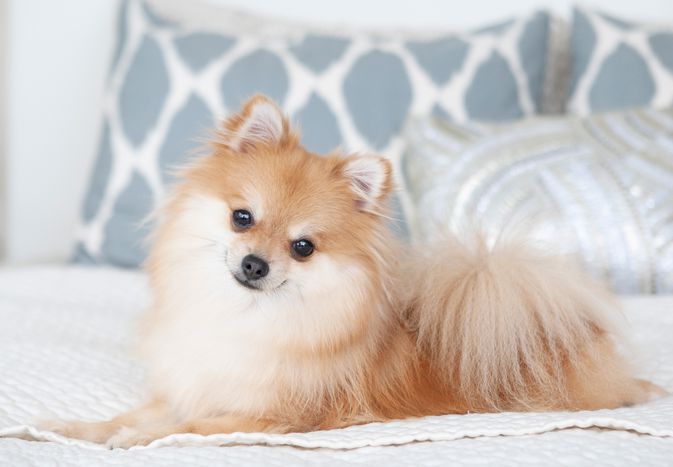
Teacup dogs are extremely popular pets because these little dogs look like puppies forever. It's no wonder they can fetch thousands of dollars apiece—
We are a comprehensive and trusted information platform dedicated to delivering high-quality content across a wide range of topics, including society, technology, business, health, culture, and entertainment.
From breaking news to in-depth reports, we adhere to the principles of accuracy and diverse perspectives, helping readers find clarity and reliability in today’s fast-paced information landscape.
Our goal is to be a dependable source of knowledge for every reader—making information not only accessible but truly trustworthy. Looking ahead, we will continue to enhance our content and services, connecting the world and delivering value.