
Understanding Dog Growling
Most people generally know what it means when a dog growls. When you hear a dog growling, it can be very frightening. That's because growling is often
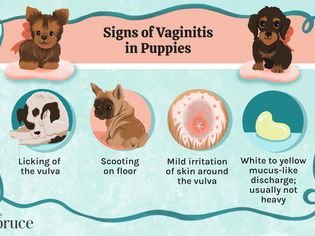
Puppy vaginitis, also called juvenile vaginitis, is the inflammation of the vagina in a puppy that has not reached puberty (had their first heat cycle). The condition can cause inflammation and irritation that may lead to a vaginal discharge or licking of the vulva. Vaginitis is usually treatable when caught early on. It often disappears on its own once the puppy matures. However, certain cases may become chronic and will require surgery. Read on to learn the signs, causes, and treatment of puppy vaginitis.
Puppy vaginitis is inflammation of the vagina that occurs in puppies before puberty. Also known as prepubertal or juvenile vaginitis, this condition occurs only in puppies, most often between the ages of 8 weeks and 6 months. Puppy vaginitis can occur in any breed of dog and causes inflammation, irritation, and discomfort in the vulva and vagina. Puppies may frequently lick the area to try to ease the discomfort.
Some puppies with vaginitis will show few or no signs of a problem. The condition is often discovered incidentally during a veterinary checkup. Each case is different, but signs typically range from mild to moderate and may come and go.
The most common symptoms of puppy vaginitis are excessive licking of the vulva and reddened skin in the area. You might see your puppy scooting on the ground to relieve the itching and burning from the condition. Some puppies have vaginal discharge, which is usually cloudy white or yellowish. This discharge might dry into the fur around the puppy's vulva. Your puppy may also need to urinate more often than usual.
Veterinarians are not entirely sure what causes puppy vaginitis, though some conditions may play a role.
These conditions may lead to irritation, stinging, and inflammation of the delicate skin around the vagina. Contamination of the vulva and vagina with fecal material can also irritate the skin directly or lead to a bacterial infection. An overgrowth of yeast is another fairly common cause of vaginitis in puppies.
Although not so common, some puppies have congenital defects in their vaginal anatomy that make vaginitis more likely, such as a hooded or recessed vulva. Foreign objects or injury to the vagina may also cause vaginitis, as can tumors or cysts in the area.
If you suspect vaginitis, a veterinarian should examine your puppy. The age of the puppy, along with characteristic symptoms, will help your vet make a diagnosis. Most likely, your vet will order a urinalysis, which can reveal urinary tract infections, and blood work to rule out any serious health issues beyond simple vaginitis. Your vet may take a swab of the vagina to check for overgrowth of yeast of bacteria.
In some cases, the veterinarian will recommend a vaginoscopy. During this procedure, a flexible camera is inserted into the vulva and vagina. This offers a visual examination of the inner walls of the vagina and can reveal structural abnormalities, cysts, tumors, or injury. The vet may collect a sample of the inner vagina to gather cells for microscopic examination, which may show changes typical of vaginitis.
In mild cases of puppy vaginitis with no complicating factors such as an underlying infection, treatment usually consists of daily cleaning of the vulva until the puppy outgrows the condition. This can be done with an unscented baby wipe or a gentle antibacterial soap. The goal is to keep the area clean and alleviate any irritation from the discharge.
If your vet is concerned about a bacterial infection, your puppy will need to take antibiotics until the infection is gone. Yeast infections may require antifungal drugs. Your vet may also recommend anti-inflammatory drugs to ease swelling and discomfort.
If your dog has a structural abnormality, surgery may be required to correct the problem. However, as the puppy grows, these structural problems will often improve.
The good news is that puppy vaginitis commonly clears up on its own after the dog goes into heat for the first time. If your puppy is old enough to be spayed, talk to your veterinarian about the best age to perform the surgery.
The vast majority of puppies with vaginitis will outgrow the condition as they mature and will have no further problems. Keeping the area clean and dry will help keep your pet more comfortable during this time. For puppies with structural problems that do not correct themselves as the dog matures, surgery may be necessary.
It's not always possible to prevent puppy vaginitis, but there are a few things you can do to reduce the chances.

Most people generally know what it means when a dog growls. When you hear a dog growling, it can be very frightening. That's because growling is often

It may be hard to get your 4-year-old to eat their broccoli, but your four-legged family member would probably love to get their paws on the popular t
Neuter is the term used to describe the surgical removal of a dog's reproductive organs, and castration is the term used for the removal of testic

If you’ve ever seen your dog slide its bottom across the floor like it’s trying to wipe something off its butt, you have officially experienced "scoot

Hypoglycemia, commonly called low blood sugar, affects puppies and small dog breeds much more often than the average adult dog. Untreated, low blood s

The Mountain Cur, or Mountain Kerr, is an intelligent, hardworking, and loyal dog breed, making it a dependable addition to many families. Referred to

The Irish terrier is a medium-sized dog breed developed in Ireland, known for their alert and rectangular body, erect tail, wiry reddish coat, and V-s

The Pumi is a medium-sized herding dog from Hungary with signature corkscrew curls on its double coat, a curled tail, and a lean, athletic body. These
We are a comprehensive and trusted information platform dedicated to delivering high-quality content across a wide range of topics, including society, technology, business, health, culture, and entertainment.
From breaking news to in-depth reports, we adhere to the principles of accuracy and diverse perspectives, helping readers find clarity and reliability in today’s fast-paced information landscape.
Our goal is to be a dependable source of knowledge for every reader—making information not only accessible but truly trustworthy. Looking ahead, we will continue to enhance our content and services, connecting the world and delivering value.