
Lead Poisoning in Dogs
Lead is a dangerous substance that if ingested by dogs can cause a variety of serious consequences including anemia, gastrointestinal disorders, letha
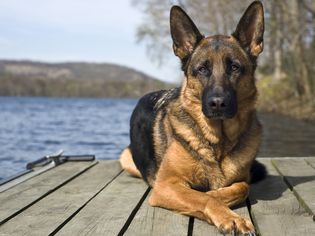
Spinal stenosis, and more specifically lumbosacral stenosis, is a painful disease affecting the lower level of the spinal cord of a dog and can cause urinary, bowel, and walking problems. Knowing what this disease is, how it is diagnosed, and what type of treatment options exist can help prepare you in case your dog is diagnosed with this problem.
Spinal stenosis is more commonly referred to as lumbosacral stenosis and is a disease affecting the structures of the spinal cord in the lumbar and sacral regions of the spine. The spinal cord is protected in the body by the boney spine and dogs with spinal stenosis have different problems that put pressure on the part of the spinal cord and nerves near the hips and tail. This results in a variety of problematic symptoms for a dog in the backside. Spinal stenosis can also occur in the cervical region of the spine but this is referred to as Wobbler syndrome (or cervical stenosis) and produces different symptoms than lumbosacral stenosis.
Spinal stenosis affects the stability of a dog's hind quarters and symptoms can vary depending on how severe the disease is or where and how the spinal cord is affected. Here are the symptoms of this disease:
Most dogs experience difficulty in using their hind limbs, specifically when they try to get up after laying down or sitting. This is due to inflammation of the nerves and muscles.
Trouble with hind legs will result in your dog having extreme trouble or reluctance when it is trying to go up steps.
General weakness in the backside may be observed as wobbling or stumbling while walking. Some dogs experience severe pain in the backside due to the nerves that are affected and will cry out if their hind end is touched. If the problem progresses without treatment, the dog may experience a disc rupture in the area and become paralyzed.
Nerves that are affected may also cause a dog with spinal stenosis to lose control of its bladder and bowels so accidents in the house and puddles of urine where the dog was laying may occur.
The pain and weakness in the backside will sometimes cause your dog's paws to knuckle over and drag on the ground.
A dog with spinal stenosis may not be able to pick up their tail or wag it. If a dog owner tries to lift a dog's tail, it may also cry out in pain or whine. Some dogs may become anxious about their tail and chew it nonstop to the point of mutilation.
Spinal stenosis is a degenerative disease so this means it develops as a dog ages. It is thought that genetics may play a role in this disease, especially in German shepherd and possibly other working dog breeds, especially if they experience repetitive strain in the lumbosacral junction area that occurs from overuse through intense physical training activities.
Some breeds are born with abnormally shaped vertebrae which can lead to spinal stenosis. Medium- to large-breed dogs that are somewhat older are most prone to spinal stenosis. However, more research needs to be done to fully understand the cause of this disease.
If you suspect your dog is developing spinal stenosis then your veterinarian will discuss the symptoms you are seeing at home and perform a full physical examination. Tests may also be done to rule out other diseases, such as blood work and urine tests.
Your vet will conduct a manual test by putting direct pressure over the lumbosacral space in various positions. In addition, the doctor may use the "tail jack" test (lifting of the tail) to see if your dog responds with pain.
X-rays of the spine will need to be taken to look at the vertebrae shape and spacing. In order to make a final diagnosis though, an MRI or CT scan will be performed. A myelogram may be performed, which injects contrast material into the area to be able to view the area to pinpoint where the pressure is occurring.
Activity restriction along with medications to address inflammation and pain is the typical treatment plan if surgery is not an option for your dog. Some dogs with spinal stenosis do well with this treatment plan but if the disease is severe enough, surgical intervention may be the only option.
A surgery called a laminectomy will be performed if it is elected. During this procedure the doctor will relieve the pressure on the nerves and the spinal cord. Not every veterinarian performs this type of surgery so you may need to visit a specialty hospital for this procedure.
In addition, your vet may strongly recommend that your dog lose weight. Excess weight can irritate a dog's back problems, especially when it has spinal stenosis.
The prognosis for dogs with spinal stenosis is good, even if surgery is performed. The laminectomy should restore the functioning of the hind legs. Post-operative care includes medications to manage pain and inflammation and may also require physical rehabilitation, cold therapy laser, and various supplements. In many cases, the dog will need to continue on a course of pain relievers or anti-inflammatory medicine for an undetermined amount of time.
Since spinal stenosis is thought to be a genetic or congenital issue, the only way to help prevent it from occurring in dogs is to screen at-risk breeds for spinal issues prior to breeding them. X-rays of the backbone should be obtained to ensure there are no apparent abnormalities of the vertebrae in the breed you choose.
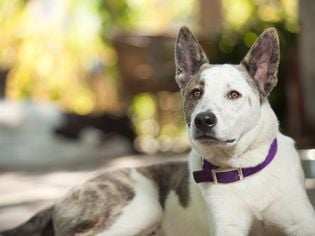
Lead is a dangerous substance that if ingested by dogs can cause a variety of serious consequences including anemia, gastrointestinal disorders, letha
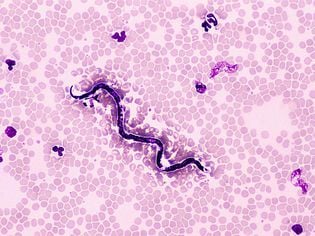
Heartworm disease is a life-threatening parasitic infection that affects the hearts and lungs of dogs. Because heartworms are spread solely by the mos

You know how active your dog is on a regular basis, so if your dog suddenly seems lethargic and is moving around less, there may be a reason why. Leth

Lymph nodes are found in various places in the body. These small glands are not typically easy to find or feel unless they become enlarged. Swollen ly

The miniature dachshund is a small hound dog breed from Germany with either a short, wirehaired, or longhaired coat and a long, low body. These dogs a
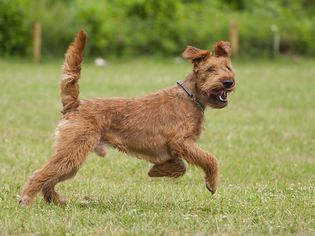
The Irish terrier is a medium-sized dog breed developed in Ireland, known for their alert and rectangular body, erect tail, wiry reddish coat, and V-s
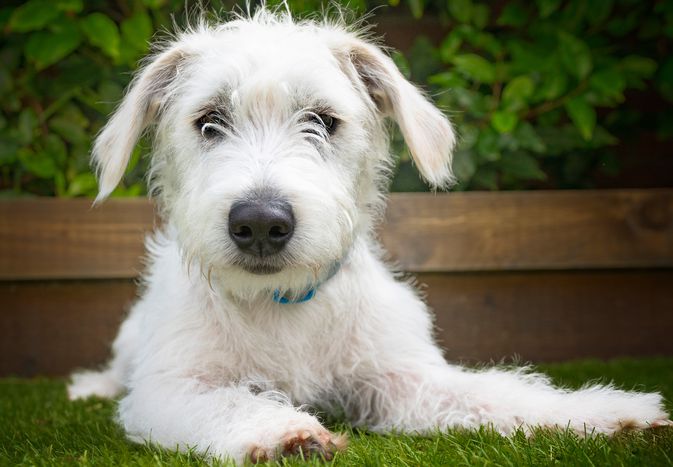
The Jack-A-Poo is a small-to-medium-sized hybrid dog breed developed in the US by breeding a Jack Russell terrier with a toy or miniature poodle. A Ja
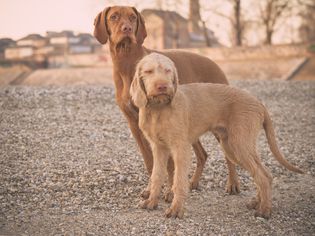
The wirehaired vizsla is a medium-size sporting dog breed from Hungary that has a short, wiry coat with a longer beard and eyebrows. It is a close rel
We are a comprehensive and trusted information platform dedicated to delivering high-quality content across a wide range of topics, including society, technology, business, health, culture, and entertainment.
From breaking news to in-depth reports, we adhere to the principles of accuracy and diverse perspectives, helping readers find clarity and reliability in today’s fast-paced information landscape.
Our goal is to be a dependable source of knowledge for every reader—making information not only accessible but truly trustworthy. Looking ahead, we will continue to enhance our content and services, connecting the world and delivering value.