
Why Does My Dog Eat My Underwear?
There are a few reasons why your dog is eating your underwear, including curiosity and attraction to the smell, but also boredom, anxiety, or health c

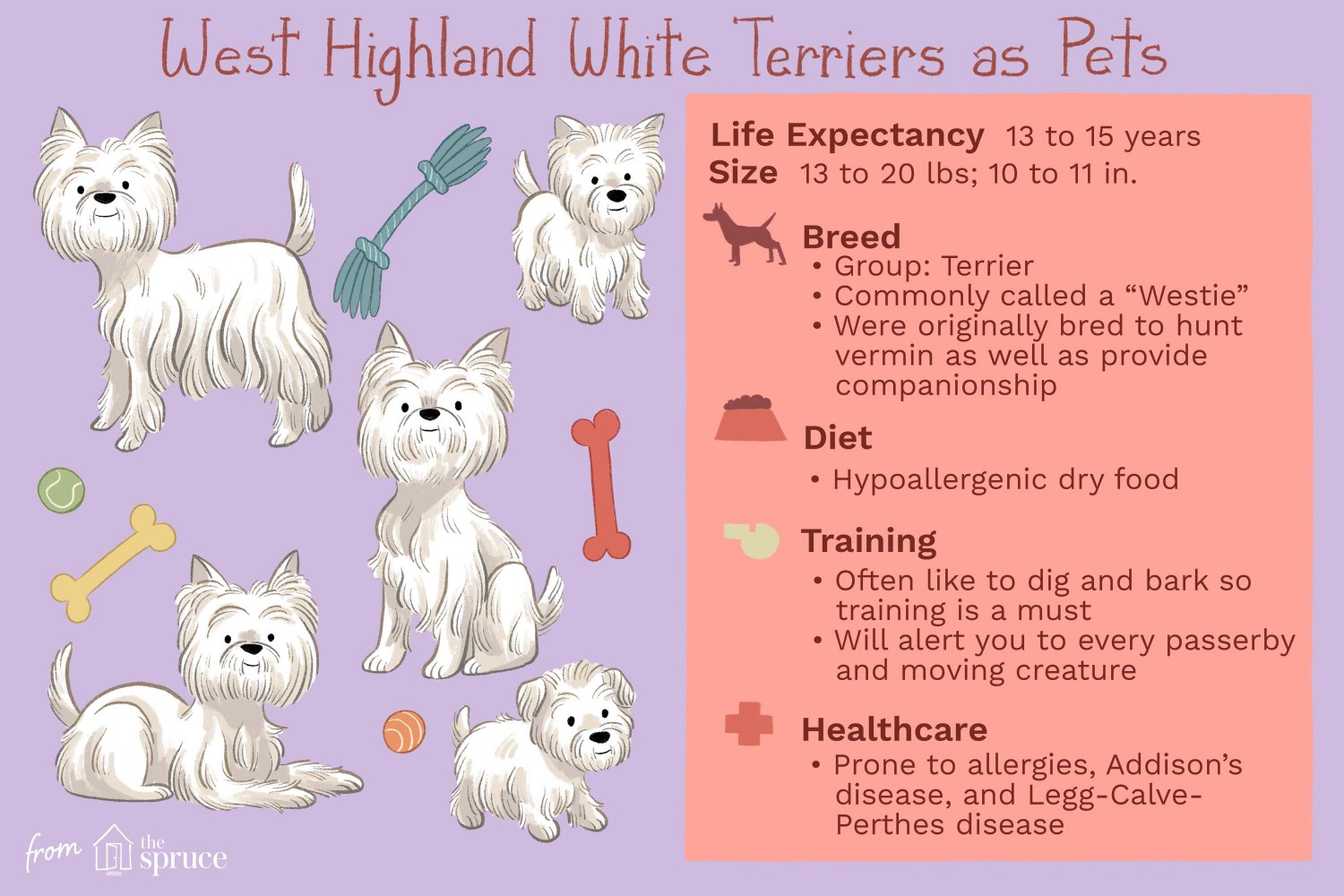
The West Highland white terrier, or Westie, is a small terrier dog breed from Scotland with a medium-length coat that’s typically pure white. The Westie’s dark, almond-shaped eyes and black nose pop against its white coat. Overall, it has a muscular build with a deep chest, and its tail is fairly short and thick. Westies are typically confident and charming little dogs. They were bred to hunt, but they also tend to love playtime with their family.
Group: Terrier
Height: 10 inches (female), 11 inches (male)
Weight: 15 to 20 pounds
Coat: Medium-length double coat
Coat Color: White
Life Span: 13 to 15 years
Temperament: Affectionate, playful, friendly
Hypoallergenic: Yes
Origin: Scotland
Westies tend to have very affectionate and playful personalties. While they do make for good watchdogs, they also are usually open to meeting strangers. High intelligence helps to shape this terrier’s personality, as well, and can make it strong-willed at times.
| Affection Level | High |
| Friendliness | High |
| Kid-Friendly | High |
| Pet-Friendly | Medium |
| Exercise Needs | Medium |
| Playfulness | High |
| Energy Level | Medium |
| Trainability | Medium |
| Intelligence | High |
| Tendency to Bark | High |
| Amount of Shedding | Low |
Terriers have a long history in the Scottish Highlands, dating back centuries as working farm dogs and hunting dogs. Many were used to keep the rodent population at bay. Besides the Westie, the Scottie, cairn terrier, and Dandie Dinmont are other breeds that descended from these dogs.
The Westie breed can trace its roots to the 1700s when Edward Donald Malcolm, 16th Laird of Poltalloch, bred for white terriers to exterminate the rodents on his estate. Thus, the breed was sometimes referred to as the Poltalloch terrier. It’s said that Malcolm had a reddish dog that was shot when it was mistaken for a fox. Consequently, he wanted only white dogs that would be identifiable.
By the end of the 1800s, the West Highland white terrier had its present name and was being entered in dog shows. The American Kennel Club first recognized the breed in 1908, and since then it’s become quite popular in the U.S. People might recognize the breed as the mascot for the dog food Cesar.

Westies need a moderate amount of exercise each day and have somewhat involved grooming. They also should receive training and socialization from a young age.
Plan to give your Westie at least an hour per day of exercise to keep it healthy and happy. A couple of daily walks and some vigorous playtime are ideal ways to burn both mental and physical energy. Westies also enjoy dog sports, including agility, rally, and earthdog events.
Unless your Westie is in a securely fenced area, avoid letting it off leash outside. This breed’s high prey drive can cause it to take off quickly chasing small animals and other perceived prey.

The traditional way of grooming a Westie’s coat is stripping (the plucking of dead hairs with a special tool) roughly every month. But some owners opt to have the coat clipped instead every four to six weeks, which tends to make it softer and curlier. You also should brush your Westie’s coat at least weekly to remove any loose hair and dirt, prevent tangles, and distribute oils.
Plan on a bath every four to six weeks, depending on how dirty your dog gets. Check your dog’s nails roughly every month to see whether they’re in need of a trim. Look in its ears at least weekly for wax buildup, debris, and irritation. Aim to brush its teeth daily.
Westies are quite smart. But they can have an independent and stubborn streak that might make training difficult. Start both training and socialization from an early age to prevent bad habits from forming. Keep training sessions fun and varied to hold your dog’s attention, and always use positive reinforcement.
Try to expose your Westie to different people and other dogs starting when it’s young to help it become comfortable around strangers. Westies usually can get along with other dogs and even cats when raised together from a young age. But they might view smaller household pets as prey, especially rodents.
Westies often can be problem barkers, alerting you to every passerby and moving creature. But if you are diligent, you can train them to bark just once and quiet on command. Westies also can have a tendency to dig. But if you’re consistent about redirecting that behavior from a young age, you might be able to put a stop to it.

Westies are prone to some hereditary health issues, including:
The Spruce / Kelly Miller
Always have fresh water accessible for your Westie. Feed a high-quality canine diet that has balanced nutrition. It’s typical to feed two measured meals per day. But you should always discuss the amount and type of food with your vet to make sure it’s suitable for your individual dog. Also, monitor treats and other extra food to prevent your dog from overeating.
Westies are a fairly popular dog breed in the United States. So it’s possible to find one in need of a home at local animal shelters and breed-specific rescue groups. If you’re looking for a puppy from a reputable breeder, expect to pay around $1,000 to $1,500 on average.
For further information to help you find a Westie, check out:
Very affectionate and playful
Typically good with respectful kids
Doesn't shed excessively
Tends to dig
Can be stubborn about training
Can be very vocal
As with any breed, if you think the West Highland white terrier is right for you, be sure to do plenty of research before obtaining one. Talk to veterinarians, pet professionals, Westie owners, reputable breeders, and rescue groups to learn more.
If you’re interested in similar breeds, check out:
There’s a whole world of potential dog breeds out there—with a little research, you can find the right one to bring home!
Westies can be good family dogs as long as they have proper training and socialization. They are best with respectful older children, as some Westies won't tolerate rough handling and might be territorial when it comes to toys and food.
Westies are generally good at adapting to different living situations, including apartments. They don't need a great deal of space. But they do tend to be vocal, which might disturb neighbors.
Westies that have proper training and socialization typically don't display aggression. But they can have a territorial and protective streak that must be managed.

There are a few reasons why your dog is eating your underwear, including curiosity and attraction to the smell, but also boredom, anxiety, or health c

Puppy barking serves many purposes, from greeting people to a form of self-defense. But, if your puppy's barking has become constant, it can be an

A wagging tail is a form of dog communication. Dogs wag their tails to tell us something about how they're feeling, just as they do with other forms o

Losing a pet is a difficult situation for everyone, including the other dogs in the household. You may not realize it, but dogs do grieve the loss of

Tea tree oil for fleas is one of many natural remedies often posed as alternatives to traditional medications, but it's not necessarily safe and effec

Hip dysplasia is a fairly common orthopedic problem in dogs that affects the stability and function of the hip joint. It is caused by abnormal growth

The German spitz is a small- to medium-sized fluffy companion breed that hails from Germany. “Spitz” breeds, sometimes called Northern breeds, are a t

The Rottweiler, or Rottie, is a large and rugged dog with a hard-working and confident demeanor. It is known for its muscular body, thick hindquarters
We are a comprehensive and trusted information platform dedicated to delivering high-quality content across a wide range of topics, including society, technology, business, health, culture, and entertainment.
From breaking news to in-depth reports, we adhere to the principles of accuracy and diverse perspectives, helping readers find clarity and reliability in today’s fast-paced information landscape.
Our goal is to be a dependable source of knowledge for every reader—making information not only accessible but truly trustworthy. Looking ahead, we will continue to enhance our content and services, connecting the world and delivering value.