Many people require different kinds of assistance in order to complete daily tasks in life. Some people cannot live independently without the services of people and specially trained pets. Others simply benefit from a visit with an animal that provides them with a sense of calm and relaxation. Therapy animals provide this special service to people.
Not to be confused with a service dog or an emotional support pet, therapy animals are socialized and trained to provide comfort and affection to people in various stressful environments. Therapy animals are most commonly seen in hospitals, nursing homes, schools, and disaster areas, and are classified as one of three types: therapeutic visitation animals, animal-assisted therapy animals, and facility therapy animals.
The most common kind of therapy animal is a therapeutic visitation animal. These are often pets that go to various places, such as detention facilities, to visit with people who may miss their own pets, but return home with their owner at the end of the day. All kinds of animals are utilized as therapy animals but regardless of the species, they typically go through a veterinarian's assessment, have received basic training, and have been screened to ensure they do well with people. Therapy animals are not protected by any federal laws, but some states have their own laws to grant rights to the owners and their pets. Vests, collars, registration, and other services are available through the National Service Animal Registry.
- 01 of 04
Therapy Dogs
Getty Images / Yellow Dog Productions
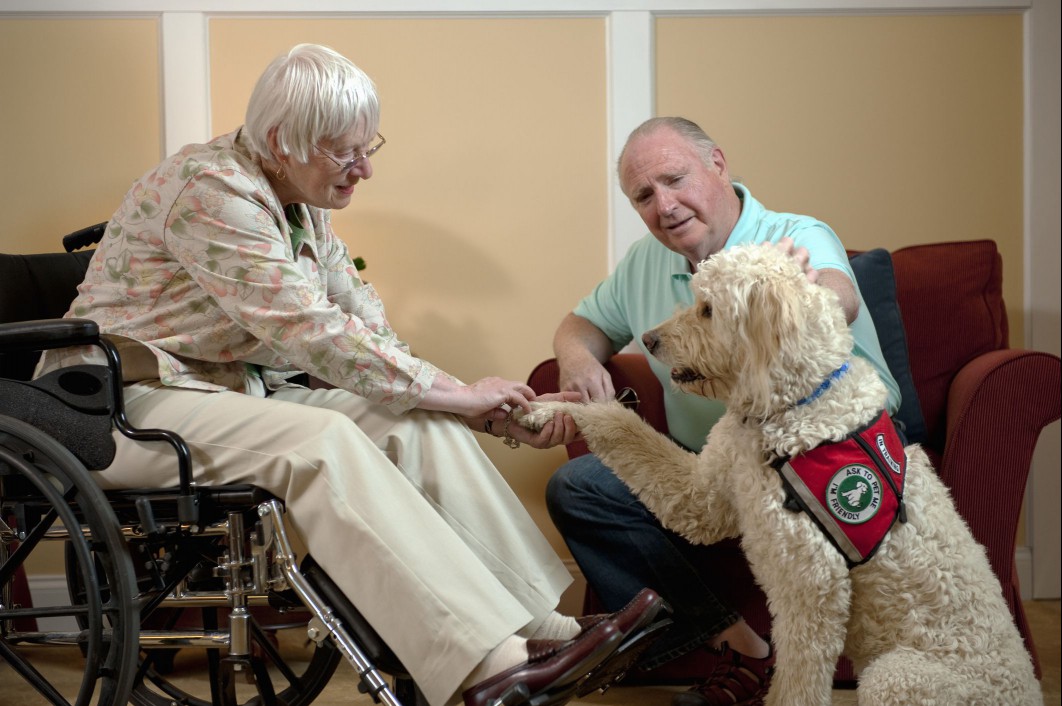
Definitely the most commonly seen type of therapy animal, dogs come in all shapes and sizes and make ideal therapy animals. Many people have probably come across a therapy dog at one point or another in their lifetime. Therapy dogs are often seen in hospitals, nursing homes, schools, detention centers, and other public places where you may be surprised to see a dog walking around.
Dogs are classic companions for humans so it is very natural for people to enjoy their presence. Studies have shown that dogs help calm and relax people, and therapy dogs are a testament to this. Larger breeds, such as Labradors and Golden Retrievers, are most often seen as therapy dogs, but that doesn't mean other breeds can't make a good therapy animal. As long as a dog is friendly towards people and knows basic obedience commands, it could probably become a therapy animal!
02 of 04Therapy Horses
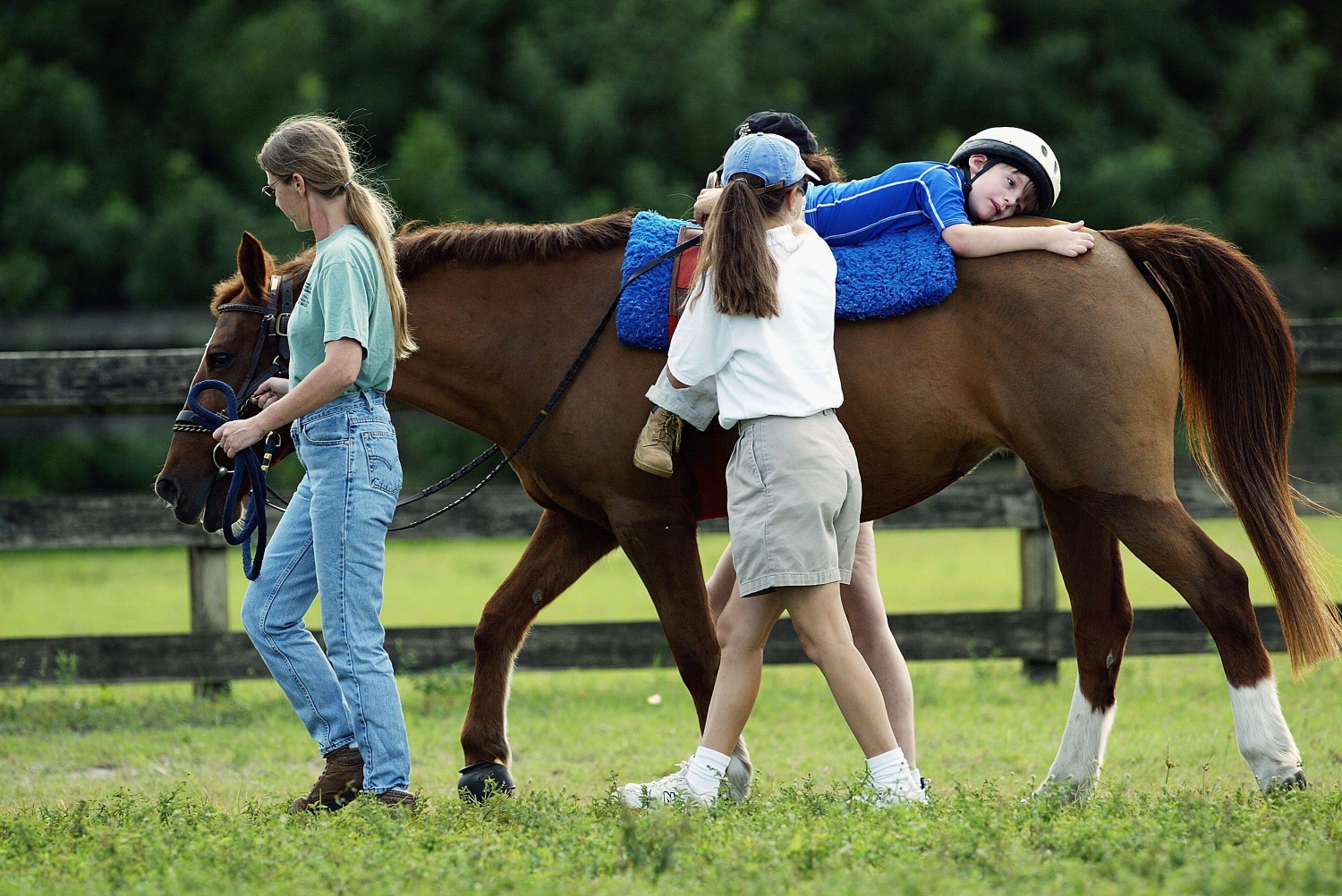
Therapy horses may be used for all kinds of therapy, including therapy with autistic children. Getty Images / Tom Ervin / Stringer
Horses, while much larger than dogs, make excellent therapy animals. You won't see a horse walking through a school (unless it's a miniature horse) but you will often seen equine-assisted therapy techniques utilizing therapy horses. Therapy horses are great animals to aid in mental health and are also used in equine-facilitated psychotherapy by addiction treatment centers, veterans groups, and other mental wellness facilities that are overseen by medical professionals.
Grooming a horse is often touted as being very therapeutic and the human emotions a horse mimics have been shown to be very beneficial for people battling many different types of psychological issues. Horses also help teach people a variety of things, such as trust building and work ethic, in addition to dealing with emotions.
Therapy horses may or may not be ridden.
03 of 04Therapy Cats
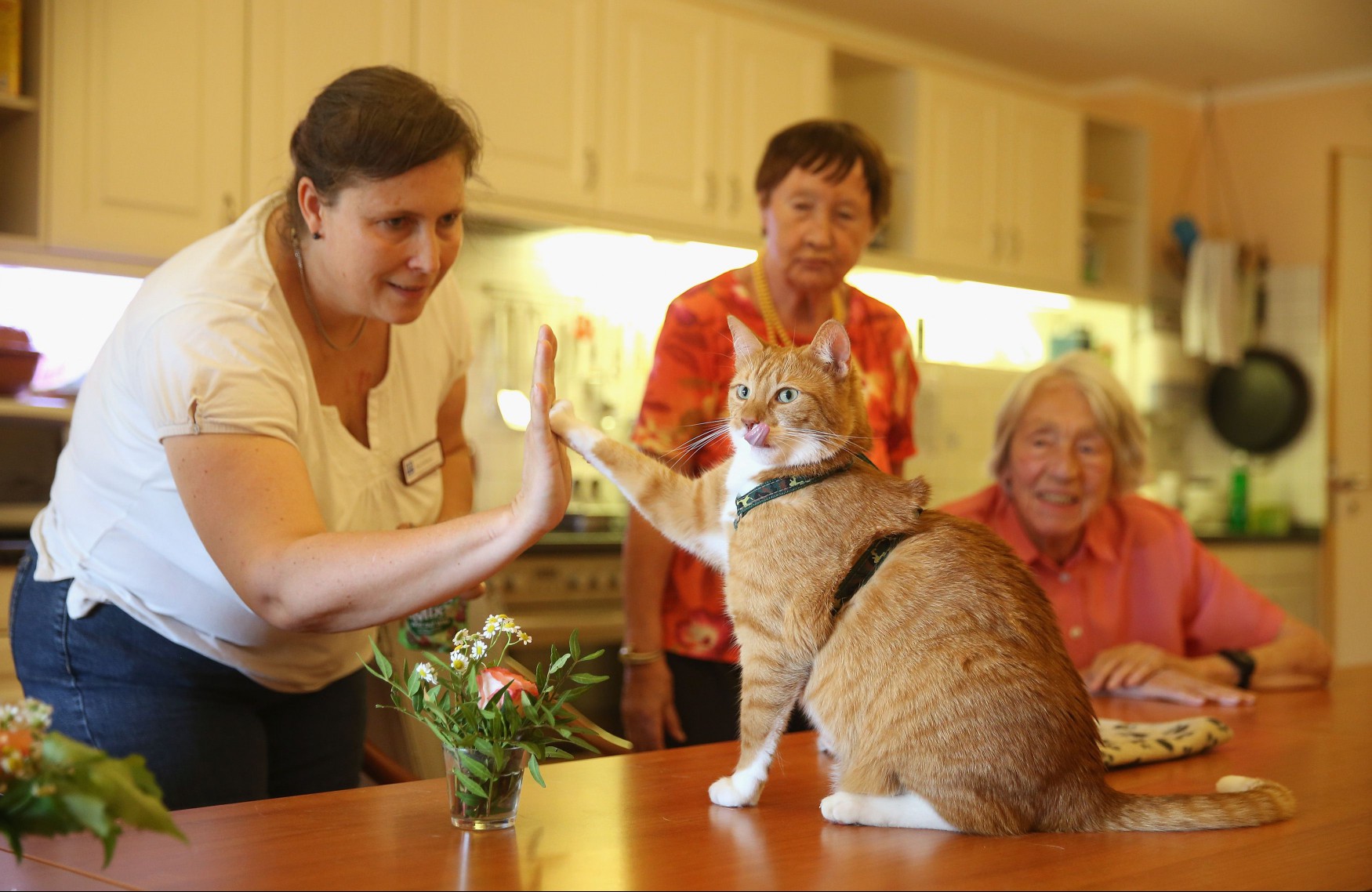
Therapy cats can make great therapy animals for visiting the elderly. Getty Images / Sean Gallup / Staff
A less obvious choice than dogs or horses, many cats can make great therapy animals. Just like dogs, cats are easy to bring into indoor facilities such as nursing homes and hospitals to aid in comforting anyone who may be missing their own pets. Many therapy cats learn to walk on a leash and can have a very calming presence for children in school, elderly in assisted living facilities, and other situations. They are also a great indoor therapy animal option for people who may have a fear of dogs.
04 of 04Therapy Rabbits

FredFroese / Getty Images Sometimes a small, quiet therapy animal is needed, and when this is the case, a rabbit makes a wonderful therapy animal. Rabbits are easy to transport, do not bark or meow, and are excellent options for people who may be frightened of both dogs and cats, since a fear of rabbits is not very common.
A therapy rabbit needs to be calm, well-socialized, and enjoy being handled and petted by people. It is ideal if a therapy rabbit is also litter box trained. Not all rabbits fit this bill, but if a friendly rabbit is comfortable in a harness and four-foot leash, they might make a great therapy animal.
Recommended Articles
 what-can-dogs-eat
Can Dogs Eat Onion?
Onions, shallots, and chives are staples in savory dishes all over the nation. Whether your prefer your onions roasted, raw, or caramelized, they can
what-can-dogs-eatWhich Vegetables Can Dogs Eat?
It may be hard to get your kids to eat their veggies, but your four-legged family member would likely have no issues gobbling down a plateful of green
dog-toxicologyLead Poisoning in Dogs
Lead is a dangerous substance that if ingested by dogs can cause a variety of serious consequences including anemia, gastrointestinal disorders, letha
dog-treatmentsHow to Get Rid of Fleas
Without proper prevention and treatment, fleas can and will infest your pets and your home. Find out how to get rid of fleas to keep your pets comfort
dog-diseases-and-disordersLaryngeal Paralysis in Dogs
Laryngeal paralysis affects the larynx, which is part of a dog's throat. The loss of muscular tone in this area affects the sounds a dog makes and ham
dog-diseases-and-disordersBloat in Dogs
Bloat, also known as gastric dilatation-volvulus (GDV), is a serious medical condition that occurs when a dog's stomach expands and rotates, trapping
hound-dog-breed-groupMountain Cur: Dog Breed Characteristics & Care
The Mountain Cur, or Mountain Kerr, is an intelligent, hardworking, and loyal dog breed, making it a dependable addition to many families. Referred to
herding-dog-breed-groupBelgian Laekenois: Dog Breed Characteristics & Care
The Belgian Laekenois is a medium-sized herding breed from Belgium with an athletic body, pointed ears, and a double coat with wiry, curly fur. This s
About Us
We are a comprehensive and trusted information platform dedicated to delivering high-quality content across a wide range of topics, including society, technology, business, health, culture, and entertainment.
From breaking news to in-depth reports, we adhere to the principles of accuracy and diverse perspectives, helping readers find clarity and reliability in today’s fast-paced information landscape.
Our goal is to be a dependable source of knowledge for every reader—making information not only accessible but truly trustworthy. Looking ahead, we will continue to enhance our content and services, connecting the world and delivering value.