
How to Handle Aggression in Dogs During Nail Clippings
Does your dog get aggressive—maybe even try to bite—when getting his or her nails trimmed? Many people enjoy getting their nails done at a salon, but
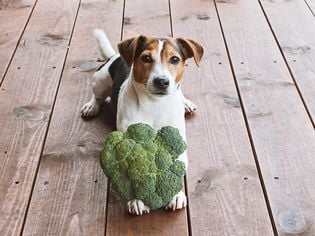
It may be hard to get your 4-year-old to eat their broccoli, but your four-legged family member would probably love to get their paws on the popular tree-like vegetable. The good news is that dogs can eat both cooked and raw broccoli, as long as there are no seasonings or oils added. However, this vegetable should always be given in very small quantities because the florets contain isothiocyanates, which can cause gastric irritation in dogs.
The short answer is, yes, broccoli is safe for dogs—provided you don’t offer your pet a heaping plateful or sauté it in garlic or butter. While most dogs get all the nutrients they need from their diets, adding certain vegetables into the mix can absolutely provide them with some important benefits. Like humans, dogs can benefit from broccoli's high levels of vitamin C, A and B, as well as calcium, phosphorus, zinc, and other minerals. Best of all, its low fat content and satisfying crunch makes it irresistible to many of our four-legged friends.
The nutrients in broccoli can help improve everything from your dog’s eyesight to their nervous system, and even promote better healing from wounds. It’s extremely rich in vitamin K, which is believed to improve bone density in dogs and help your dog develop stronger, healthier bones—which is a very important benefit for older dogs as well as a younger, energetic dog or working breed to support their more active lifestyle. Broccoli's vitamin C levels may also help aging dogs ward off certain illnesses, while the potassium it contains is a mineral that can help promote healthier heart in both humans and dogs alike.
Broccoli can be offered to your dog either raw or cooked, but like humans, dogs often have an easier time digesting high-fiber foods that have been cooked. However, be sure that there are no spices, oils, or seasonings added during the cooking process, like butter, as they can be harmful to your dog. Popular additions such as garlic or onions are actually toxic for dogs.
Like all “people” food, broccoli should only be offered in moderation (and with the OK from your pet's veterinarian). There is a small danger associated with the crucerfoerous veggie; the florets contain isothiocyanates, which can cause gastric irritation in some dogs, ranging from mild to severe. Isothiocyanates are a naturally-occurring sulfur-based plant compound that can be found in many dark green vegetable varieties, including broccoli, kale, and cabbage. Humans can safely consume isothiocyanates—they’re even believed to help protect our bodies from certain forms of cancer or the growth of tumors—but in dogs, eating too much broccoli could actually prove fatal.
Veterinarians believe that the total amount of treats outside of a pet's dog food should be less than 10 percent of your dog's daily intake—more than 10 percent could be considered toxic, and 25 percent could actually be fatal. The toxic amount will, of course, depend on the size of your dog and how much he or she is actually consuming each day.
Every dog is unique, and what irritates some dogs is perfectly fine to feed others. As always, be sure to check in with your veterinarian before offering broccoli, and monitor your dog closely after offering a small amount the first time to ensure that their digestive system can tolerate it.
If you believe your dog ate too much broccoli, the first symptoms to watch out for are diarrhea, vomiting, or other signs of stomach upset, such as whimpering. These symptoms will require immediate veterinary attention.
In addition to potential stomach upset or even dangerous toxicity, broccoli stalks have also been known to be a choking hazard, as they can lead to an obstruction in the esophagus, particularly in smaller breeds. When offering broccoli to your pet, it should be offered as bite-sized chunks and, ideally, softened first by steaming. Steamed broccoli stems are also acceptable to serve, but to help your pup better digest the broccoli—and prevent choking—be sure to peel the harder skin on the outside first prior to steaming and slicing the broccoli for your pooch.
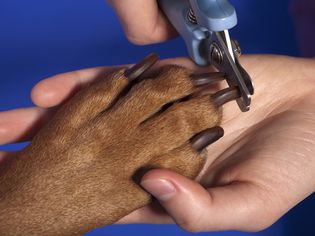
Does your dog get aggressive—maybe even try to bite—when getting his or her nails trimmed? Many people enjoy getting their nails done at a salon, but

Lead is a dangerous substance that if ingested by dogs can cause a variety of serious consequences including anemia, gastrointestinal disorders, letha

A cleft palate may not be immediately noticeable in a puppy, but it's a serious birth defect that needs special attention. This physical deformity

The schnoodle is a cross between the schnauzer and poodle. Schnoodles have medium-length, curly, dense fur and appear in various colors. Schnoodles ca

The Lagotto Romagnolo is a medium-sized ancient working breed from Northern Italy with wooly, curly fur. They are prized for truffle hunting skills, b

The Small Münsterländer is a medium-sized hunting dog with an affinity for water and can swim, point, retrieve, track, and even flush out small game.

The Greater Swiss Mountain Dog is a giant working dog breed from Switzerland with a short, tricolor double coat and typically a white blaze running do

Good things really can come in small packages. Case in point: toy dog breeds, which in addition to being downright adorable make excellent companions.
We are a comprehensive and trusted information platform dedicated to delivering high-quality content across a wide range of topics, including society, technology, business, health, culture, and entertainment.
From breaking news to in-depth reports, we adhere to the principles of accuracy and diverse perspectives, helping readers find clarity and reliability in today’s fast-paced information landscape.
Our goal is to be a dependable source of knowledge for every reader—making information not only accessible but truly trustworthy. Looking ahead, we will continue to enhance our content and services, connecting the world and delivering value.