
False Pregnancy in Dogs
If your female dog is showing signs of pregnancy when she has not mated, you may be surprised to learn that this is actually a common occurrence in th

Cats and dogs are vulnerable to nicotine poisoning in homes where people keep tobacco products, nicotine gum, and e-cigarettes. Nicotine, a natural chemical stimulant, is toxic to dogs and cats in small doses, so accidental ingestion from playing with or chewing a nicotine-containing product is dangerous and can even be fatal. Learn to recognize signs of nicotine toxicity and what you can do to help an animal suffering from the effects of exposure to this harmful substance.
Nicotine poisoning refers to toxicity associated with the ingestion of products that contain this chemical. Dogs and cats, like people, have numerous nicotine receptors throughout their nervous systems that can easily be overstimulated by exposure to nicotine. Pets, however, are less tolerant of nicotine than people, so they are more likely to suffer negative side effects.
Nicotine can be toxic even when administered in small amounts to cats and dogs. The degree to which pets are affected by nicotine depends on how much is ingested and the weight of the animal. Symptoms have been reported at doses as low as 1 mg/kg (milligram per kilogram of body weight), and the median lethal dose in dogs is 9.2 mg/kg. The average cigarette contains 9 to 30 mg of nicotine, and the nicotine becomes concentrated in the cigarette butt, so an already smoked cigarette can still be very dangerous.
Symptoms of nicotine poisoning can develop quickly and are dependent upon the amount and type of nicotine ingested, relative to a cat or dog's body weight. Symptoms generally occur within 30 to 60 minutes of ingestion but can be delayed by several hours. Because nicotine poisoning can be fatal, contact your veterinarian immediately if you notice symptoms.
Symptoms of nicotine poisoning may appear rapidly and can worsen dramatically as time passes, becoming life-threatening. No matter how little nicotine your pets ingested, it's wise to call your veterinarian immediately as you watch for signs of toxicity. Hyperactivity, drooling, and constricted pupils are definite indications that your pet is being affected by nicotine, and a visit to the vet is probably warranted. Motor control issues, labored breathing, rapid heartbeats, and seizures indicate a medical emergency and should be evaluated by a vet immediately. Nicotine poisoning can appear similar to other toxicities, so be sure to mention to your veterinarian if you have nicotine products in your home.
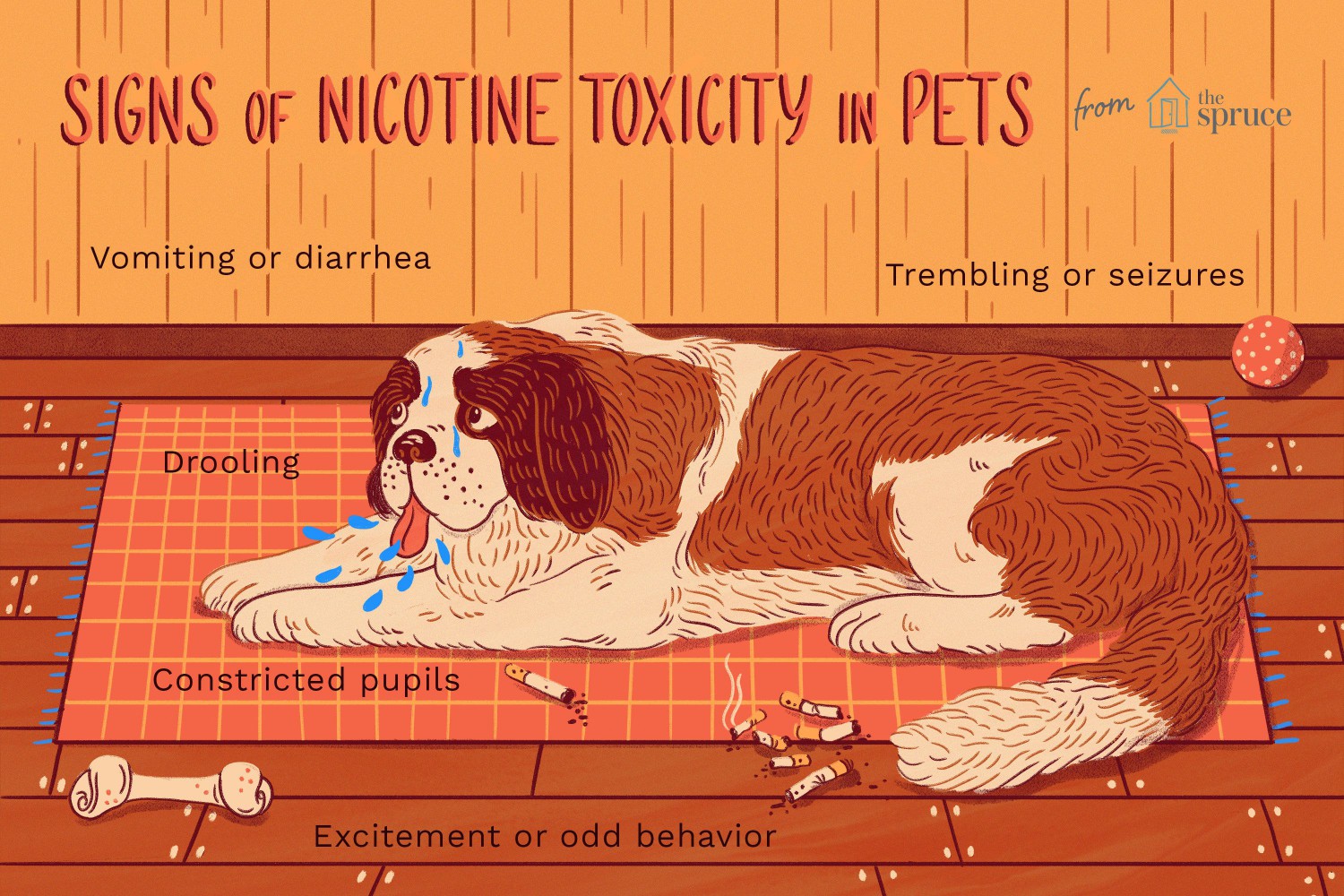
The Spruce / Alison Czinkota.
The cause of nicotine poisoning in pets is the ingestion of any of these items that contain nicotine:
A veterinarian will diagnose nicotine poisoning based on a pet's symptoms and the owner's knowledge of the pet ingesting a nicotine product. Since nicotine poisoning symptoms are similar to those of other toxic exposures—like chocolate, caffeine, or pesticides—it is important to know the likelihood of nicotine consumption. In addition, some nicotine-based products, like gum, contain the sweetener xylitol, which is also poisonous to pets and should be brought to your vet's attention so that treatment can be tailored to the pet's particular predicament.
As with any toxicity, early treatment is crucial. Your veterinarian will take measures to prevent the absorption of nicotine into your pet's system, promote excretion of the nicotine which has already been absorbed, and provide supportive treatment for symptoms your pet is displaying. Early induction of vomiting can make a big difference in how much nicotine enters your pet's bloodstream. Administering activated charcoal can also reduce the amount of nicotine absorbed.
Treatment may also include managing seizures with anticonvulsant medications, treating heart and blood pressure abnormalities, ensuring adequate respiration, and providing intravenous fluids to enhance nicotine elimination.
The prognosis for nicotine toxicity depends significantly on the exposure dose. For instance, low-dose exposure has a good to excellent prognosis while high-dose exposure is more dangerous and carries a more guarded prognosis. If a pet can be stabilized within the first four hours of high-dose exposure, the prognosis for complete recovery is significantly improved.
Keeping all nicotine-containing products out of pets' reach is the most effective prevention. It's also important to carefully dispose of cigarette butts and other materials that may contain traces of nicotine so that your pet can not access them.

If your female dog is showing signs of pregnancy when she has not mated, you may be surprised to learn that this is actually a common occurrence in th

Cloudy eyes in dogs may be caused by age-related changes, cataracts, dry eye, or a number of other eye conditions. Your dog's cloudy eyes may appe

If you see your pup limping or hear them yelp in pain while climbing the stairs, you may wonder, can dogs pull a muscle? Dogs can have pulled muscles

The Sloughi dog is a medium-to-large hound breed native to North Africa that is known for its long legs, slim build, short fur, and fast running abili

The Glen of Imaal terrier is a medium-size terrier dog breed from Ireland with a medium-length wiry coat that doesn’t shed much. Overall, the dog is l

The English springer spaniel is a sturdy and handsome medium-sized sporting dog breed from England with a medium-length coat in a variety of colors. K

The pudelpointer is a medium-sized dog breed known for their playful personality and robust work ethic. Although they excel as family companions, this

People have bred working dogs throughout history to assist in hunting, farming, herding, and other challenging jobs. These dogs are powerful, robust b
We are a comprehensive and trusted information platform dedicated to delivering high-quality content across a wide range of topics, including society, technology, business, health, culture, and entertainment.
From breaking news to in-depth reports, we adhere to the principles of accuracy and diverse perspectives, helping readers find clarity and reliability in today’s fast-paced information landscape.
Our goal is to be a dependable source of knowledge for every reader—making information not only accessible but truly trustworthy. Looking ahead, we will continue to enhance our content and services, connecting the world and delivering value.