
Why Almost Any Dog Can Do Agility Training
What’s the first thing that comes to mind when you picture a dog doing agility training? A tall border collie gracefully gliding through an obstacle c

If you notice your dog is peeing blood, you'll likely feel alarmed. Knowing why this may happen is helpful for you to understand what kind of help your dog may need. You should check your dog's urine color from time to time to ensure everything looks normal. Urine should be a pale to dark yellow color, so if you see your dog peeing blood clots or red/pink urine, you should contact your veterinarian immediately. Find out more about the underlying causes of peeing blood, how a diagnosis is made, and how this condition may be treated.
Dogs have two kidneys inside their abdomen. These kidneys produce urine and send it down tiny tubes called ureters into the bladder, where it is stored until it is peed out through the urethra. If bleeding occurs in the kidneys, ureters, bladder, or other body parts that interact with the urinary tract, then this blood may be seen in the urine.
Bladder Stones , which are also known as uroliths, can form inside the bladder of a dog due to changes in the pH of the urine, various mineral imbalances in the urine, urinary tract infections, and other reasons. These stones can come in a variety of different shapes and sizes, and as they move around in the bladder they can also cause trauma to the bladder wall. Bleeding often occurs as a result and may be seen when a dog pees. Bladder stones are fairly common in dogs.
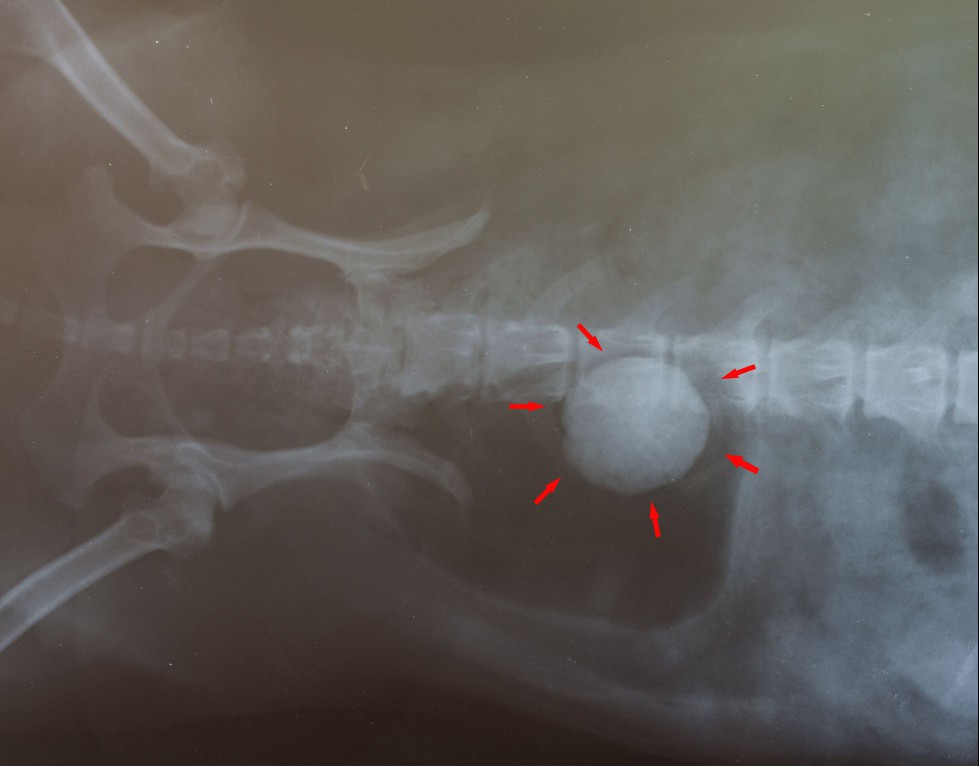
rarinlee / Getty Images
Technically referred to as nephrolithiasis, kidney stones are not as common as bladder stones in dogs but they can still occur. They most often appear on X-rays taken for another concern as an incidental finding. Kidney stones can remain in the kidneys or pass into the ureters but both scenarios can cause your dog to pee blood.
Tumors are growths of abnormal cells, and the bladder is unfortunately not exempt from these masses. If a bladder tumor begins to bleed, this blood will come out in your dog's urine.
Only male dogs have a prostate so this issue will only pertain to your dog if it is a boy. The prostate is a gland that urine needs to pass through before being peed out. If the prostate is inflamed, enlarged, or diseased, blood may appear in the urine due to the unhealthy prostate.
When bacteria gets into the kidneys of a dog, an upper urinary tract infection occurs and is called pyelonephritis. This type of infection can cause a dog to have blood in its urine since the kidneys are connected to the bladder.
Just like in a kidney infection, a bladder infection can cause a dog to pee blood. Bacteria can irritate the bladder wall and cause the oozing of blood. A lower urinary tract infection is the most common reason why a dog may have blood in its urine.
If your dog recently had a major trauma like being a bad fall or being hit by a car, the urinary tract may have been injured and have bleeding. Some types of abdominal surgery that involve or are near the bladder or kidneys can cause irritation and inflammation may cause some blood to appear in your dog's pee.
If you have a female dog that has not been spayed, you may see some blood when your dog urinates during her heat cycle. This is not necessarily an indication of a problem.
If you notice blood in your dog's urine, contact your vet immediately. After a complete physical examination by your veterinarian, a urine sample will be collected and analyzed for abnormalities. Sometimes there isn't enough blood present for you to see in your dog's pee without the use of a microscope, so your dog may even have blood in its urine without you knowing it. Other times the urine will be so red that you think it contains nothing but blood. An X-ray or ultrasound may also be performed to check for tumors and bladder or kidney stones.
Depending on the reason for the blood in your dog's urine, medications, surgery, or simply time may be necessary to make it stop. A dog that has had bladder trauma or is in its heat cycle will typically stop peeing blood after a few days or when the estrus part of the heat cycle ends. Dogs with urinary tract infections or prostatic disease most often require medications to decrease inflammation and kill the bacteria that is present and stones and tumors will typically require surgery.
While there's not much you can do to prevent your dog from peeing blood, knowing risk factors can help you be more prepared should it occur. Female dogs, especially those with a recessed vulva, are at higher risk for urinary tract infections. Certain breeds of dogs are predisposed to having bladder issues that can cause them to pee blood. For example, Dalmatians, Shih Tzus, Miniature Schnauzers, Bichon Frises, Lhasa Apsos, and Yorkshire terriers are at-risk breeds for developing bladder stones and West Highland white terriers, Scottish terriers, Shetland sheepdogs, beagles, American Eskimos, and wire fox terriers are at risk for developing bladder tumors. Any breed of dog may be affected by bladder or kidney issues though, so the problem of peeing blood is not exclusive to any breed of dog.
What’s the first thing that comes to mind when you picture a dog doing agility training? A tall border collie gracefully gliding through an obstacle c
Crate training is a method of house training your puppy or dog. The crate is used to keep your dog confined when you are not able to supervise. Since
Dogs love to run, play, and explore the world without the hindrance of a leash. However, letting your dog off the leash can be dangerous for your dog
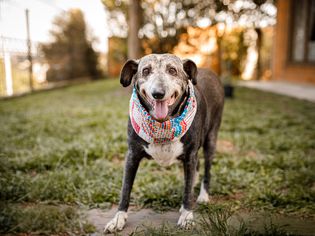
Seeing your dog reach seniorhood is a blessing, even if can be difficult to witness them start to slow down a little. When your dog officially reaches
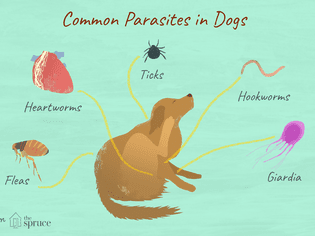
Parasites in dogs are common and may be found internally or externally. These parasites can be extremely irritating to dogs and can cause serious heal
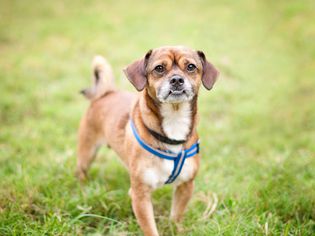
If you're looking for a small but active dog, a Chug dog, across between a Chihuahua and a pug might be what you're looking for. Some people consider
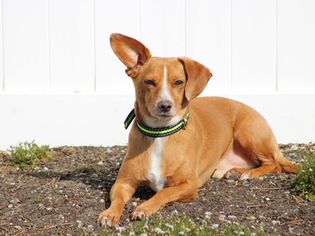
Chiweenies are a cross of the Chihuahua and dachshund dog breeds. Also known as choxies, this small dog breed has grown in popularity over the years a
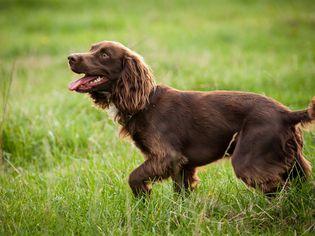
The Boykin spaniel is a medium-sized sporting dog breed native to South Carolina with floppy ears, a sturdy body, and liver brown fur on a wavy, water
We are a comprehensive and trusted information platform dedicated to delivering high-quality content across a wide range of topics, including society, technology, business, health, culture, and entertainment.
From breaking news to in-depth reports, we adhere to the principles of accuracy and diverse perspectives, helping readers find clarity and reliability in today’s fast-paced information landscape.
Our goal is to be a dependable source of knowledge for every reader—making information not only accessible but truly trustworthy. Looking ahead, we will continue to enhance our content and services, connecting the world and delivering value.