
Dog Food Basics
When it comes to feeding your dog, there are some decisions you need to make. Proper nutrition is one of your dog's basic needs, and it's about more t
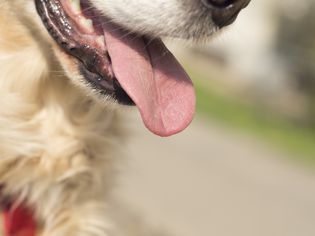
You may wish to calm your dog's breathing if they are panting or have a rapid respiratory rate. Dogs pant for several reasons, many of which are normal and require no human intervention. However, panting or rapid breathing in dogs may be related to anxiety or health problems. Here's how to calm your dog's breathing, plus how to identify physical and behavioral problems that warrant a visit to the veterinarian.
Before you try to calm your dog's breathing, know that it may be perfectly normal. Dogs naturally pant to cool their bodies through the exchange of air. It's also a normal behavior associated with exercise and excitement. Calming methods can help dogs relax and cool down faster. But if your dog is breathing rapidly and shows any signs of illness, you should contact a veterinarian.
These steps may help calm a dog's breathing:
Most dogs can pick up on our emotions by reading our facial expressions and body language. Take a deep breath and try to relax. Sit with your dog and speak in a calm voice while gently massaging or petting them. Turn on a fan or provide a cooling bed if needed.
Panting is not the same as labored breathing. If a dog is having difficulty breathing, they may stretch out their neck and hold their elbows away from their body to allow their chest to rise and fall more. You may see significant abdominal movements as well.
If you see your dog breathing in this manner, bring them to the nearest open vet's office or emergency facility. The same applies if you notice any of the following serious signs:
Healthy dogs have a resting respiratory rate of 40 or fewer breaths a minute, and it shouldn't be labored or difficult. Dogs may breathe faster than usual for many reasons, and some are more serious than others.
Active dogs may breathe faster to bring more oxygen into their lungs to better oxygenate muscles as they play. This is the same reason humans breathe fast and heavily when exercising. Dogs also need to pant to cool off and when they are exercising; they will have more heat to expel compared to when they are at rest.
When dogs are in pain, they don't always show it. They may not scream out, and they don't cry the same way humans do. Panting can be one of the subtle signs of pain in dogs.
Panting can also be a cue that a dog is stressed, but you'll need to assess your dog's body language and facial gestures to make sure it's not something else. Other signs of stress and anxiety include lip licking, averting their gaze from whatever is causing them stress, being hyper-aware of their surroundings, and whale eye—when you can see just a sliver of the white of their eyes.
Since dogs pant to regulate their body temperature, if a dog has a fever or is overheated from being out on a hot day, they will pant to try to cool off. A dog with heat exhaustion will start to pant heavily to try and cool off. If they can't cool off, they may develop life-threatening heatstroke.
This is breathing that may sound like snorting, huffing, or wheezing. It's not usually an emergency and is common in smaller breed dogs, such as shih tzus, Yorkshire terriers, and pugs. Although it can sound frightening, reverse sneezing is usually short-lived and either is derived from inhaling an irritant or just being excited about something.
Certain small breed dogs, such as chihuahuas, Yorkshire terriers, and toy poodles are prone totracheal collapse. This is a condition in which the trachea, or windpipe, narrows or collapses on itself when they inhale, creating a very narrow airway. This can limit the dog's ability to inspire air and can cause an increase in respiratory effort as well as a characteristic honking sound.
Labrador retrievers are prone to this condition in which the flaps of cartilage that form the larynx become paralyzed and can no longer retract, or widen, during breathing. Instead, the airway narrows. This can cause a raspy sound while breathing as well as more rapid breathing, heat intolerance, and a change in the sound of the dog's bark.
Dogs that are in heart failure can have a rapid respiratory rate and an increased respiratory effort. When a dog is in heart failure, its heart cannot adequately pump blood out to the lungs and the body. This can lead to congestion in the vessels in the chest that then causes fluid to seep into the chest cavity, known as pleural effusion. This can put pressure on the lungs themselves, preventing them from inflating all the way. A dog will breathe faster to compensate for this.
Dogs with pushed-in faces or short muzzles may suffer from brachycephalic syndrome, where one or several parts of the airway are abnormally formed and prevent normal airflow. This may include an elongated soft palate, stenotic nares, everted laryngeal saccules, and other anatomical abnormalities. Dogs with brachycephalic syndrome are prone to heavy and fast breathing because of their anatomy, and also are more at risk for overheating as a result of their inefficient breathing and inability to pant effectively.
Dogs with existing health conditions, such as kidney disease or diabetes, may begin breathing rapidly if their condition worsens or they develop a secondary health problem.
If your dog is in respiratory distress—if they are having difficulty breathing, or if their gum and tongue color is changing to a dusky gray or blue—veterinary medical attention should be sought immediately.
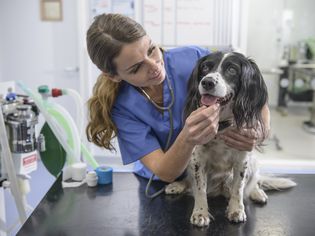
Upon arrival at the veterinary hospital, your dog may be placed in an oxygen chamber or given nasal oxygen. If the rapid breathing is related to heat exhaustion or heatstroke, the team will carefully cool your dog off. The vet may also give a sedative to help calm your dog.
At the same time, your vet will run diagnostic tests to assess your dog's condition and look for specific problems. Further treatment will depend on the cause of the rapid breathing and may involve medications and/or surgery.
It can be concerning to see your dog breathing fast or with difficulty for seemingly no reason at all. Respiratory distress is a true medical emergency. If you are at all concerned with the way your dog is breathing, seek veterinary attention immediately.

When it comes to feeding your dog, there are some decisions you need to make. Proper nutrition is one of your dog's basic needs, and it's about more t

You just got the most adorable puppy and you want to breed him. But when can male dogs breed, and should you be concerned about leaving your puppy int

Plants like poison ivy, oak, and sumac can lead to much frustration for those exposed to them. The oil of these plants causes an allergic reaction tha
Acetaminophen, or Tylenol, is a common over-the-counter medication used by humans to relieve pain and fever. You may be tempted to give your dog aceta

Does your dog have bronchitis? This inflammatory condition of the lower airway causes a dog to cough, gag, run a fever, and feel generally unwell. Tre
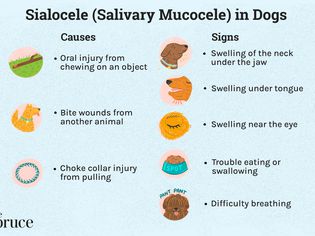
A salivary mucocele, also called a sialocele, is a condition of the salivary glands or ducts that creates a swollen lump in the neck near the jaw, und

Maltipoos are the result of a cross between the Maltese and miniature or toy poodle. These small pups have a medium-to-long, wavy, or curly coat that'

The Bullmastiff is a large-boned and muscular working dog from England with a short coat. Its origins as a cross between the Mastiff and the bulldog a
We are a comprehensive and trusted information platform dedicated to delivering high-quality content across a wide range of topics, including society, technology, business, health, culture, and entertainment.
From breaking news to in-depth reports, we adhere to the principles of accuracy and diverse perspectives, helping readers find clarity and reliability in today’s fast-paced information landscape.
Our goal is to be a dependable source of knowledge for every reader—making information not only accessible but truly trustworthy. Looking ahead, we will continue to enhance our content and services, connecting the world and delivering value.