
The Pros and Cons of a Raw Food Diet for Dogs
Raw food diets have become increasingly popular as alternatives to traditional dog food diets. Alongside many other dog food trends like grain-free, v
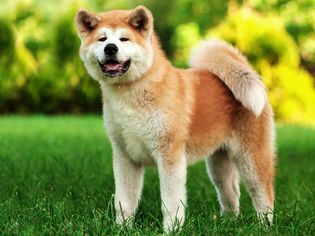
The Akita is a large Japanese dog breed that was bred as a hunting dog with a thick, double coat of fur. They're deliberate, strong-willed dogs who make loyal companions—for the experienced dog parent.
Akitas' insulating coat is only one of their distinct features, along with their thick necks, erect triangular ears, and upright curled tails, all of which make them look like big, cuddly stuffed animals. But make no mistake: For all their loyalty, Akitas are confident, headstrong, and not friendly with all animals. This not an ideal breed for first-time dog parents or families with small kids.
Learn more about the Akita, including the breed’s history, care needs, and temperament.
GROUP: Working
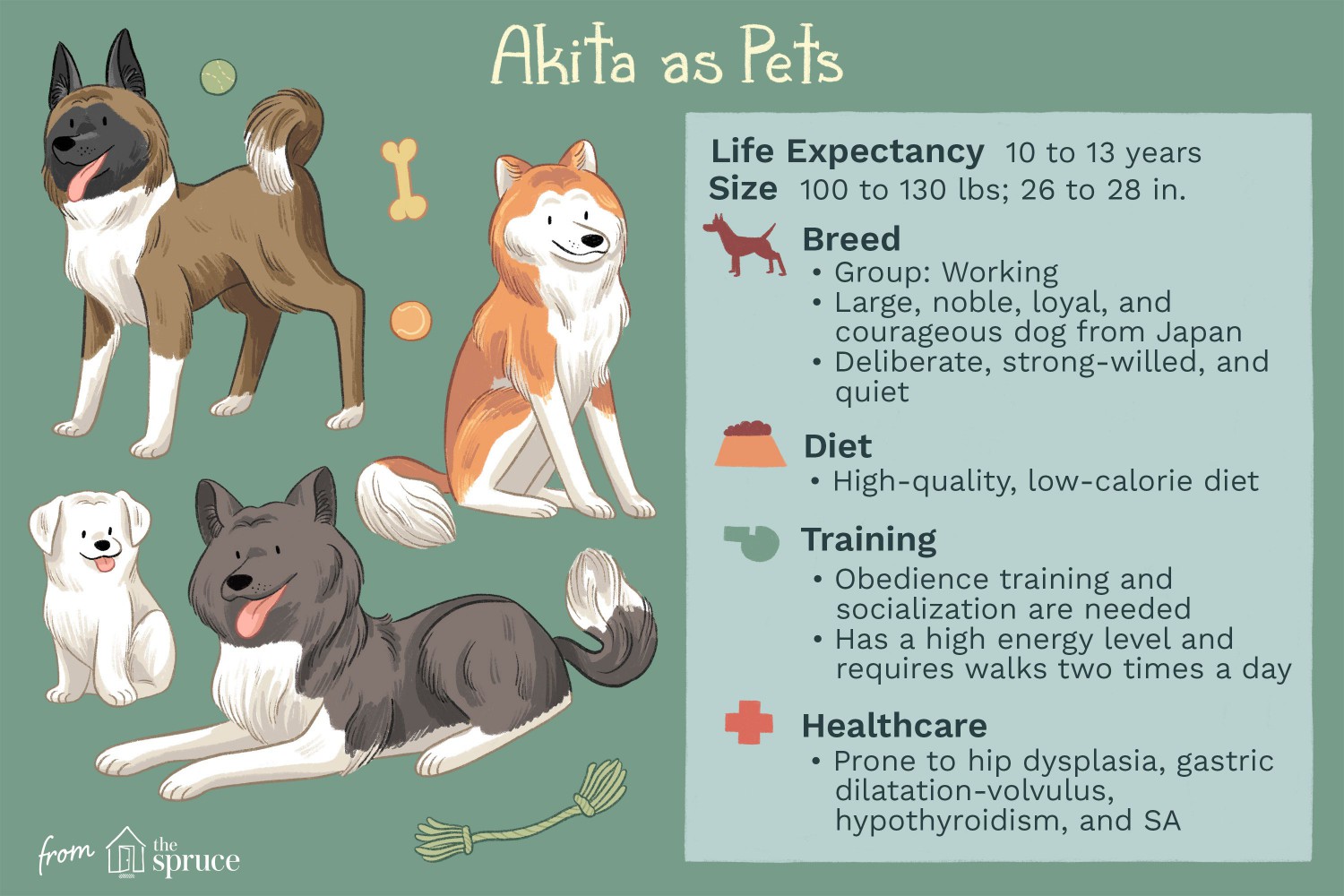
HEIGHT: 26 to 28 inches (males); 24 to 26 inches (females)
WEIGHT: 100 to 130 pounds (males); 70 to 100 pounds (females)
COAT: Short, thick, double-layered coat; some have a recessive gene that gives them a long coat
COAT COLOR: Brindle and pinto (each with white markings)
LIFE SPAN: 10 to 13 years
TEMPERAMENT: Affectionate, loyal, independent, protective
HYPOALLERGENIC: No
ORIGIN: Japan
While the Akita can be sweet and affectionate with family members, this breed best suits an experienced dog parent and a home without young children or other dogs (especially dogs of the same sex). They also have a tendency for “mouthing,” or carrying things in their mouths.
Akitas can be stubborn, and in general they aren't "overly tolerant" of people outside their sphere. They aren’t good around strangers, and may get protective. They are also good watchdogs who will bark to alert you if something is amiss.
If you have a small household and decide the Akita is the right breed for you, you will have a loyal and steadfast companion for life.
| Affection Level | High |
| Friendliness | Low |
| Kid-Friendly | Low |
| Pet-Friendly | Low |
| Exercise Needs | High |
| Playfulness | High |
| Energy Level | High |
| Trainability | Medium |
| Intelligence | Medium |
| Tendency to Bark | Low |
| Amount of Shedding | High |
The Akita is named for the northern Japanese prefecture (region) where they were developed in the 17th century. They were bred as hunting dogs, big and courageous enough to take on boars, deer, and even bears.
Akitas carry an immense cultural importance in Japan, where they're thought of as loyal protectors and symbols of good health. Families receive Akita statues when a baby is born, and ailing people gather the same, spurring them to get better.
The loyalty of the Akita is epitomized by the dog Hachiko, born in 1923 and owned by a Tokyo professor. Hachiko accompanied the professor to the train each day and returned to escort him home each afternoon. When the professor died at work, he continued to walk to and from the station each day for nine years.
Hellen Keller brought the first known Akita to the United States in 1937. More followed after World War II, when returning servicemen brought the dogs home with them. (Many Akitas didn't live through the war.) The American Kennel Club recognized the Akita in 1972.
Akitas are powerful, strong, and athletic, which means they require plenty of exercise and serious training. They are also known to shed considerably more than most dogs, so you'll need to be a vigilant groomer.
This dog is also known for catlike behavior, such as cleaning themselves and stalking prey with their body low to the ground.
This breed does not like hot weather, mostly because of its thick coat, so an Akita needs to be aware of when the dog may be overheated.
This breed has a relatively high energy level and should get 60 minutes of exercise daily, consisting of at least a brisk daily walk or two. But you should avoid walking an Akita at a dog park where they may get aggressive. They love their people or person more than anything, so be ready to participate in that exercise, too.
Yeah, you'll need to be ready for some shedding. Double-coated Akitas shed all year, but they'll blow their coats twice a year, resulting in massive fur loss. Better make sure you have a vacuum handy.
Basic routine grooming is all that this breed tends to need for maintenance. Daily brushing will keep the coat healthy and decrease shedding. Brushing should be done more frequently during peak shedding seasons. You can use a metal comb, pin brush, and shedding rake.
Unless your dog gets dirty, you don’t need to bathe them often. A bath once every three months or so may work well, as you don’t want to dry out the skin and coat.
In addition, you should trim your dog’s nails often, brush your dog’s teeth daily, and check and clean their ears as needed. If you notice symptoms like irritation or inflammation in the ears, mouth, or on the feet, consult a veterinarian.
Akitas are very smart dogs who are also known to be willful and stubborn. They'll be challenging, but you'll need to start their training and socialization as soon as you can. You don't want them to be overly weary of the outside world. The protective Akita has a strong prey drive, is often hesitant around strangers, and probably won't get along with other dogs.
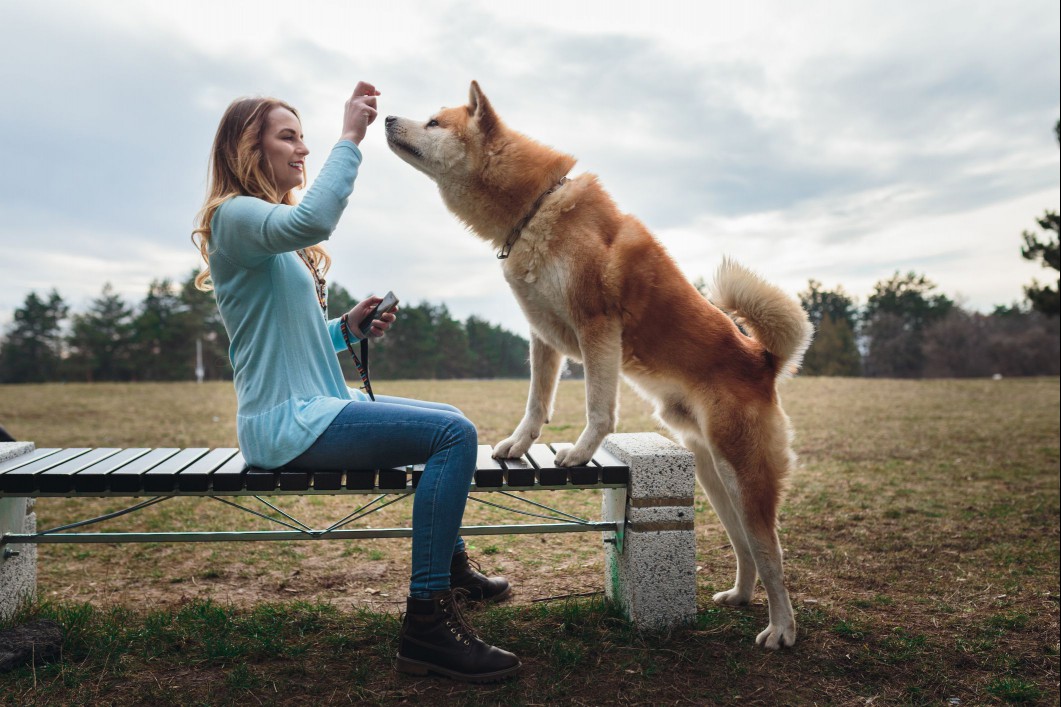
Keep training—obedience or otherwise—to short, fun sessions to keep your smart Akita from getting bored (e.g. 5-minute training sessions). It will also strengthen the owner-dog bond. Use positive reinforcement techniques and plenty of treats.
Speaking of boredom, an Akita may develop some destructive habits when bored or left alone too much. That's why it's important to make sure they have enough exercise and playtime.
Responsible breeders strive to maintain the highest breed standards as established by kennel clubs like the AKC. Dogs bred by these standards are less likely to inherit health conditions. However, some hereditary health problems can occur in the breed. The following are some conditions to be aware of:
The Spruce / Kelly Miller
Akita puppies will grow rapidly and need a high-quality, low-calorie diet so they don't grow too fast. Adult Akitas should be fed twice a day with a total of 3 to 5 cups of dry food.
Be sure to monitor your Akita for weight gain and discuss any special needs with your veterinarian.
Also, to help prevent bloat, ensure your dog doesn’t eat too much or too fast, use slow feeders, and take other steps like avoiding exercising too close to mealtime.
Before searching for an Akita, know that breeders and rescue groups will typically not release this breed into a home with young children. The Akita Club of America is a great place to start your search for a puppy. Its list of member breeders covers the U.S., Canada, and Spain.
The best way to find an Akita rescue is to research local rescue groups; you may also get leads from the Akita Club of America Rescue and the Namaste Akita Rescue Alliance.
Akitas are generally going to cost at least $1,000 for a puppy, but it can cost as much as $4,000 for a purebred offspring of competition-winning parents. If you are lucky enough to find an Akita who needs to be rehomed, you will pay considerably less.
If you're still deciding whether an Akita is right for your family, carefully consider this breed’s exercise and grooming needs, as well as their temperament. They aren’t suitable for all households, so don’t rush into bringing one home.

Before you decide whether an Akita is the right dog for you, do plenty of research and talk to other Akita owners, reputable breeders, and rescue groups to learn more.
If you are interested in similar breeds, compare these:
There is a wide variety of dog breeds out there. With a little research, you can find the right one to bring home.
Akitas, bred as hunters and even fighting dogs, can be aggressive. They can be aggressive toward dogs of the same sex and small animals they view as prey. With human strangers, Akitas are more likely to be aloof or standoffish rather than aggressive. However, extended eye-to-eye contact with an Akita may trigger an aggressive reaction as they see it as a threat.
Akitas are generally not good dogs for families. They're large and could be intolerant toward young children. Plus, they're difficult to train, requiring a lot of time to overcome their stubbornness. However, they can be great, loyal companions for someone willing to put in the work.
Akitas may be willing to cuddle with their person, the individual who's formed a strong bond with them over the years. But don't expect to cuddle with an aloof Akita during your first meeting.

Raw food diets have become increasingly popular as alternatives to traditional dog food diets. Alongside many other dog food trends like grain-free, v

Grieving for the loss of your pet is an important part of coping. If you have lost a special animal companion, the emotions can become overwhelming. T

Most homes contain dangerous chemicals and caustic substances that may be toxic to dogs. Adult humans know better than to come into contact with the m
The Dandie Dinmont Terrier is a small terrier breed native to the border of England and Scotland with short legs, a long body, and silky hair that gro
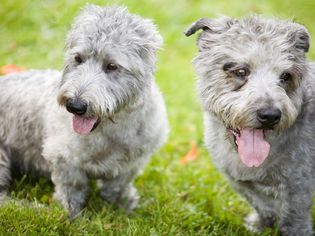
The Glen of Imaal terrier is a medium-size terrier dog breed from Ireland with a medium-length wiry coat that doesn’t shed much. Overall, the dog is l
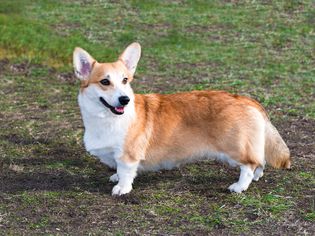
The Cardigan Welsh Corgi is a medium-sized herding dog breed from Wales with signature short legs, a water-resistant double coat, pointed ears, and a
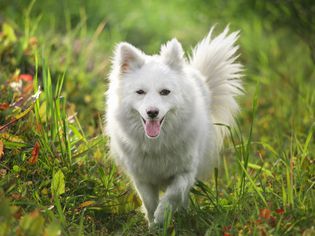
While spitz dog breeds don't refer to one specific breed, they do include a consistent set of characteristics that can be found in a variety of di
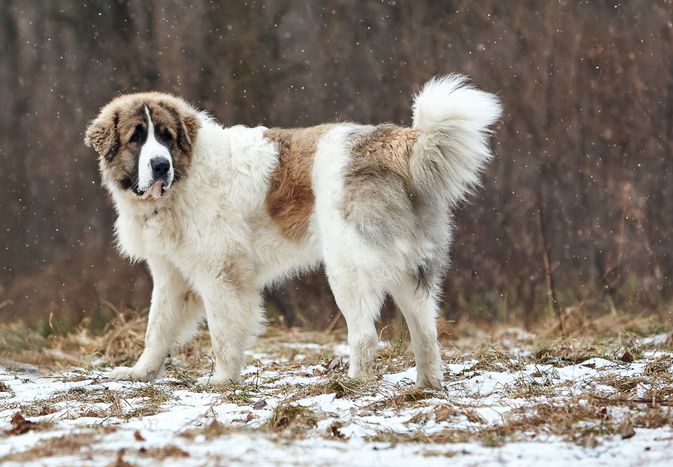
The Pyrenean Mastiff, also known as the Mastín del Pirineo, is a large, fluffy-haired breed originally from the Pyrenees mountains in northeastern Spa
We are a comprehensive and trusted information platform dedicated to delivering high-quality content across a wide range of topics, including society, technology, business, health, culture, and entertainment.
From breaking news to in-depth reports, we adhere to the principles of accuracy and diverse perspectives, helping readers find clarity and reliability in today’s fast-paced information landscape.
Our goal is to be a dependable source of knowledge for every reader—making information not only accessible but truly trustworthy. Looking ahead, we will continue to enhance our content and services, connecting the world and delivering value.